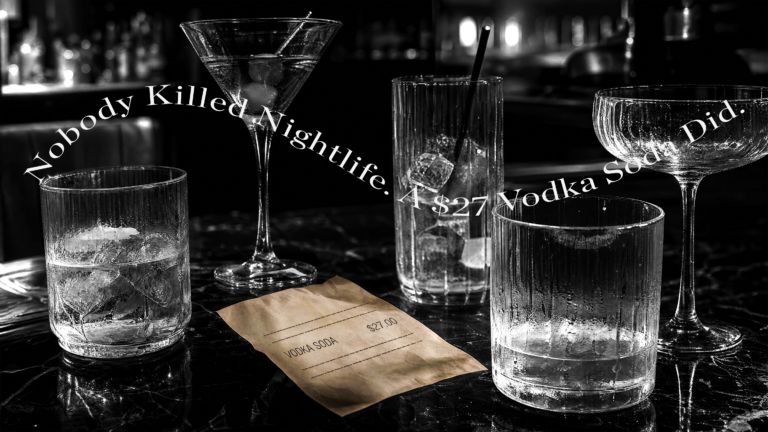
Nobody Killed Nightlife. A $27 Vodka Soda Did.
Gen Z isn’t killing nightlife- they’re broke. Between $27 vodka sodas and the death of “ladies drink free,” going out stopped feeling accessible.
- By: Julianne Elise Beffa
Everyone keeps asking why young people stopped going out. As if Gen Z collectively woke up one morning, downloaded a meditation app, bought a Stanley Cup, and decided bottle service was morally corrupt. Every month there’s another think piece blaming TikTok, wellness culture, dating apps, Ozempic, COVID-19, sobriety, anxiety, or “the death of club culture” for why nightlife supposedly isn’t what it used to be.
Please be serious. Nightlife didn’t die because people suddenly became boring. Nightlife is dying because a casual Friday night out requires the financial planning of a destination wedding.
I went out in New York at 18 years old with maybe $40 to my name and still managed to have the greatest nights of my life. We pregamed on sidewalks, split Ubers eight ways, flirted with promoters for free entry, and learned survival tactics that honestly deserved academic recognition. I used to buy bras two sizes too big so I could hide airplane shot bottles in my boobs, order a free Diet Coke at the bar, and get drunk off what my friends called my “titty minibar.” That wasn’t trashy. That was economic innovation.
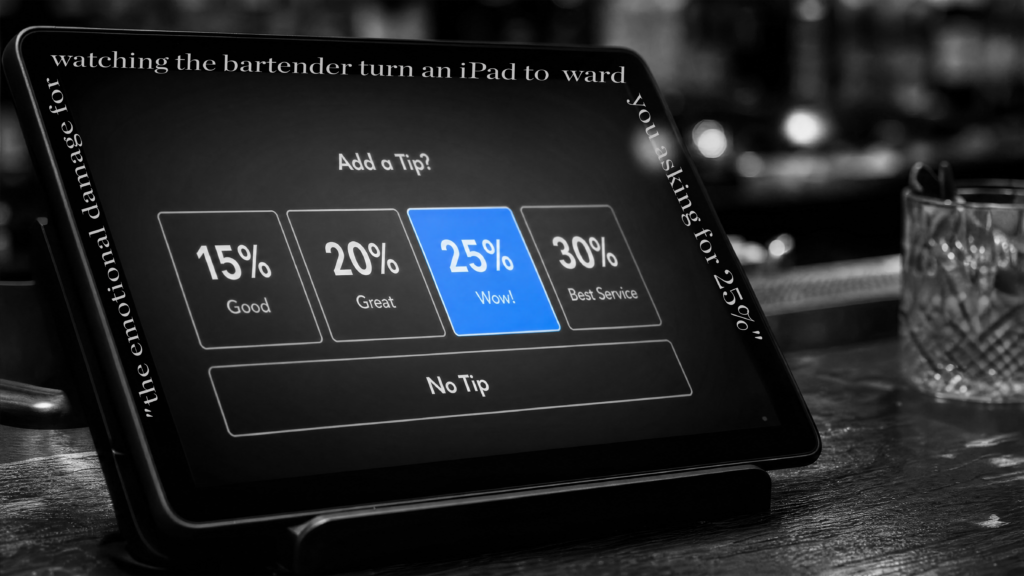
And before anyone says “well that’s just growing up,” no. Going out used to feel accessible. Messy, spontaneous, democratic. The entire magic of nightlife was that you didn’t need to be rich to participate in it. Now? A vodka soda in Manhattan costs $27 before tip, tax, and the emotional damage of watching the bartender turn an iPad toward you asking for 25%.
The Industry..
The industry keeps framing the decline of nightlife as a cultural problem because admitting it’s a pricing problem would force venues to confront the fact that they helped engineer their own collapse. You cannot spend fifteen years turning every nightclub into a luxury brand activation and then act shocked when normal people stop showing up. That’s the real story nobody in hospitality wants to say out loud: nightlife stopped being fun the second it became obsessed with appearing expensive.
Every bar suddenly needed a neon sign, a reservation system, an influencer corner, Japanese ice cubes, and cocktails that taste like eucalyptus candle wax but cost the same as a phone bill. Dive bars started acting like airports. Clubs became less about music and more about proving you know a promoter named Luca who wears Prada sneakers and texts exclusively in voice notes. And somehow through all of this, the actual customer experience got worse.
People aren’t staying home because they hate socializing. They’re staying home because spending $300 to stand shoulder-to-shoulder in a room where nobody dances and everyone secretly hates each other is not the revolutionary cultural experience the industry thinks it is.
Research backs this up, too. Young consumers are pulling back hardest on nightlife spending because discretionary income has collapsed under inflation, rent increases, student debt, and stagnant wages. According to recent consumer data, Gen Z is drinking less than previous generations not necessarily because they’re healthier, but because alcohol and going out have become financially irrational luxuries for most people.
And honestly? They’re right. There’s also a larger uncomfortable truth here that nightlife people especially hate discussing: the industry got lazy during the bottle service era.
For years, venues made insane money catering to finance bros, tourists, and table clients willing to spend $4,000 to hold a sparkler next to a bottle of Don Julio while Swedish House Mafia played a remix of a remix of a remix. The average person stopped mattering because the economics of nightlife shifted toward extracting maximum revenue from fewer high-spending customers.
That works for a while. Until culture changes. Until people get tired. Until everyone realizes the emperor has no clothes and the “exclusive experience” is basically just paying $900 for the privilege of standing near a fake ficus tree while a girl from TikTok records herself pretending to have fun.
The irony is that people still desperately want nightlife. You can see it everywhere. Warehouse parties are thriving. Underground scenes are thriving. House parties are back. Community-driven events sell out instantly. Any bar with affordable drinks and actual atmosphere is packed.
People don’t hate going out. They hate feeling scammed. That’s the difference. A great night out still holds almost mythical value in modern culture because real nightlife gives people something the internet never can: unpredictability. Possibility. Human friction. Chemistry. The feeling that your life might accidentally change because someone dragged you to a bar you almost didn’t go to.
That’s why this conversation matters so much. Because nightlife is not just drinking. It’s cultural infrastructure. It’s where scenes are born. Relationships start. Creative industries collide. Fashion moves. Music spreads. Entire identities get shaped after midnight.
But somewhere along the line, hospitality forgot the hospitality part. And now the industry is facing the consequences of pricing out the exact young people who made nightlife culturally relevant in the first place.
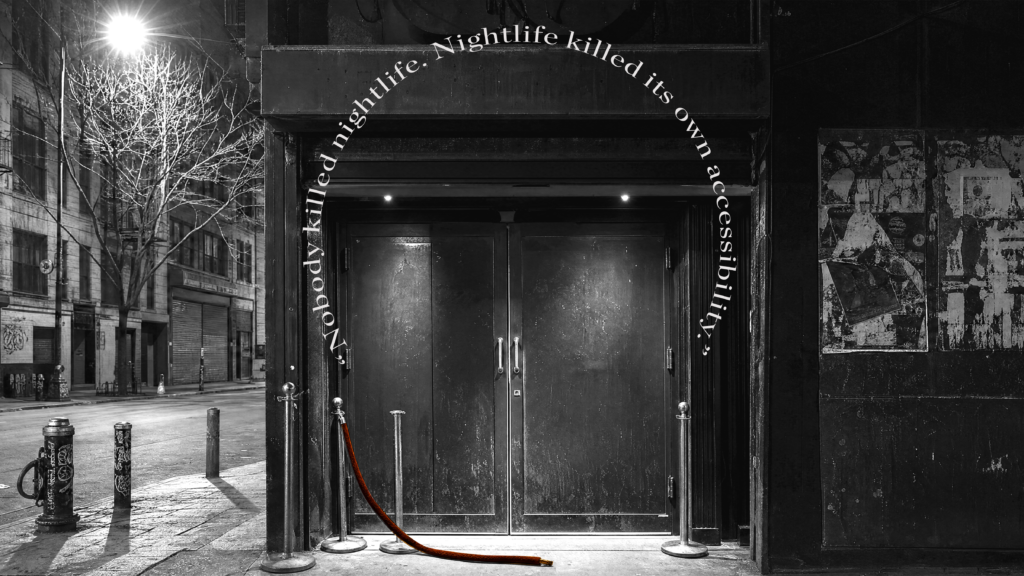
Nobody killed nightlife.
Nightlife killed its own accessibility.
And it did it one $27 vodka soda at a time.
Read More


Exclusives
Julianne Beffa