Brian Grummert and Blake Walker Bring a Gin-First Vision to the Lower East Side with Chin Up Bar
A first true taste of gin, savory seafood plates, and thoughtful hospitality define Chin Up Bar, the design-forward new cocktail bar on Chrystie Street.
- By: Julianne Elise Beffa | Photos By: Photo Memory NYC
It was one of those New York nights where the cold feels staged. Not just cold but theatrical. Wind slicing down Chrystie Street like it had a personal vendetta. Everyone moving fast, shoulders hunched, faces tucked into scarves as if we were all late to something urgent. The city felt sharp. Metallic. Unforgiving. I slipped into Chin Up Bar mostly to defrost and partially to confirm a long held belief. I do not like gin. Within minutes, that belief began to unravel.
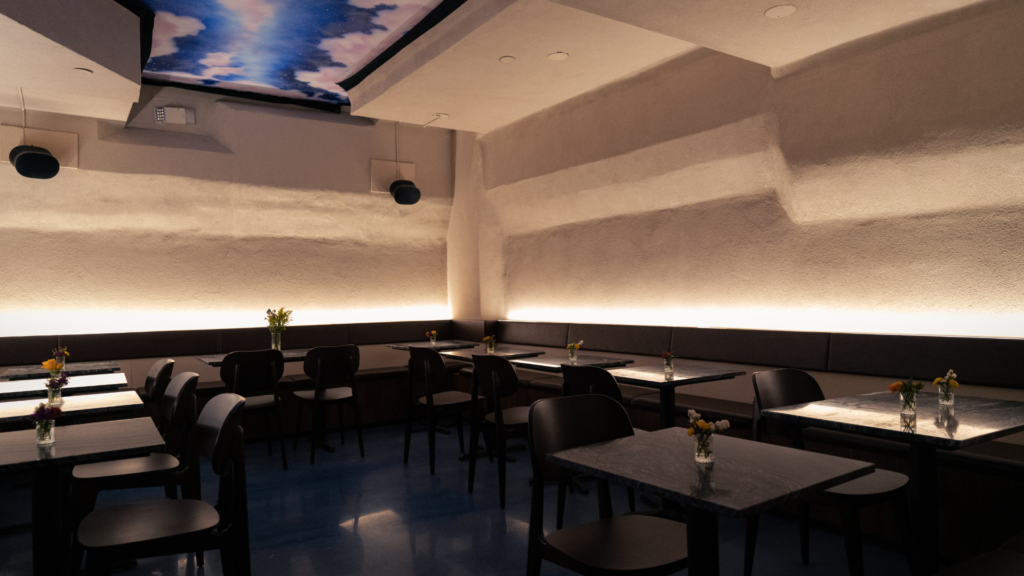
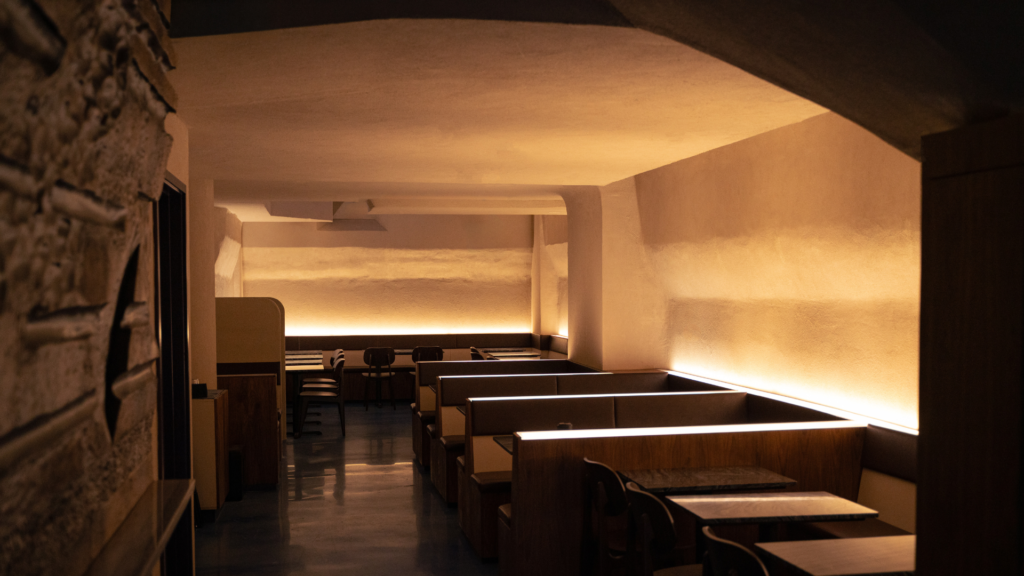
The shift happened before the first sip. The door closed behind me and the temperature changed, not just physically but atmospherically. The entrance rises dramatically, layered with greenery that mirrors Sara Roosevelt Park across the street. In a pocket of Lower Manhattan that rarely offers visual breathing room, the openness feels almost luxurious. Light filters in through tall windows. The bar stretches comfortably instead of crowding you. The ceiling installation reflects the sky at dusk, catching pale lavender and smoky blue tones that make the room feel connected to the outside rather than sealed off from it.
“It’s unique in this area of Manhattan to be able to see a tree line so nearby without buildings obstructing your view,” co founder Brian Grummert tells LOOP Mag in an exclusive interview. “So we wanted to bring the street in a little bit and have the airy and open feeling that you can have going into a park.” That design decision sets the tone for everything else. Chin Up Bar does not feel like it is trying to overpower the Lower East Side. It feels like it is harmonizing with it.
Related | Y.E.S: Yap, Eat, and Sip at Skylark NYC
The Interiors
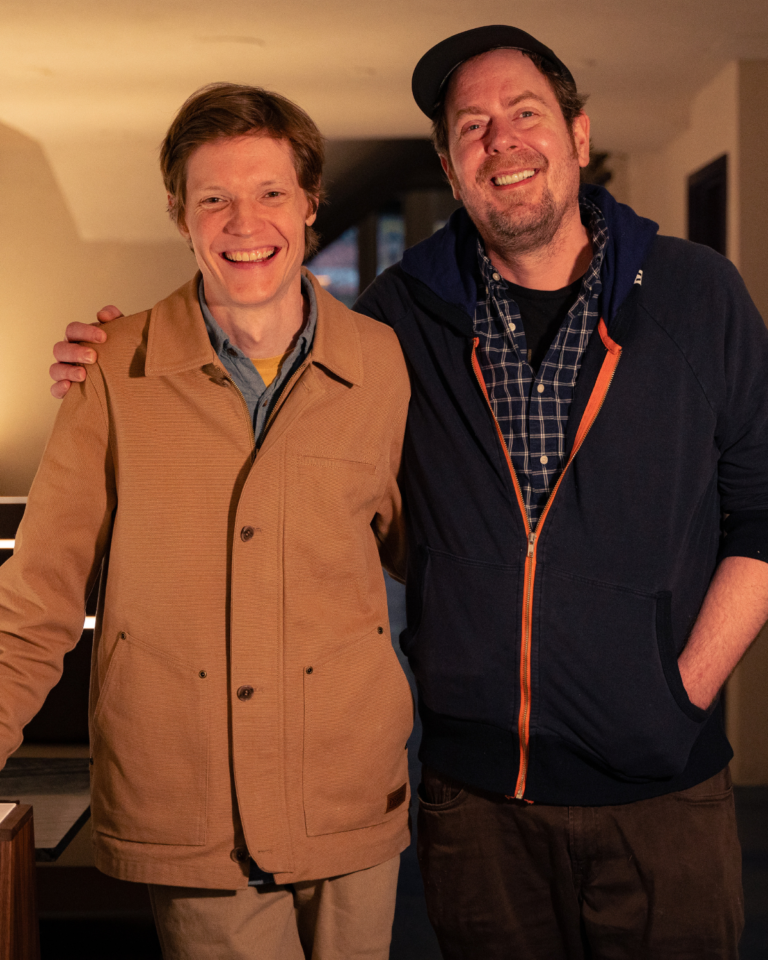
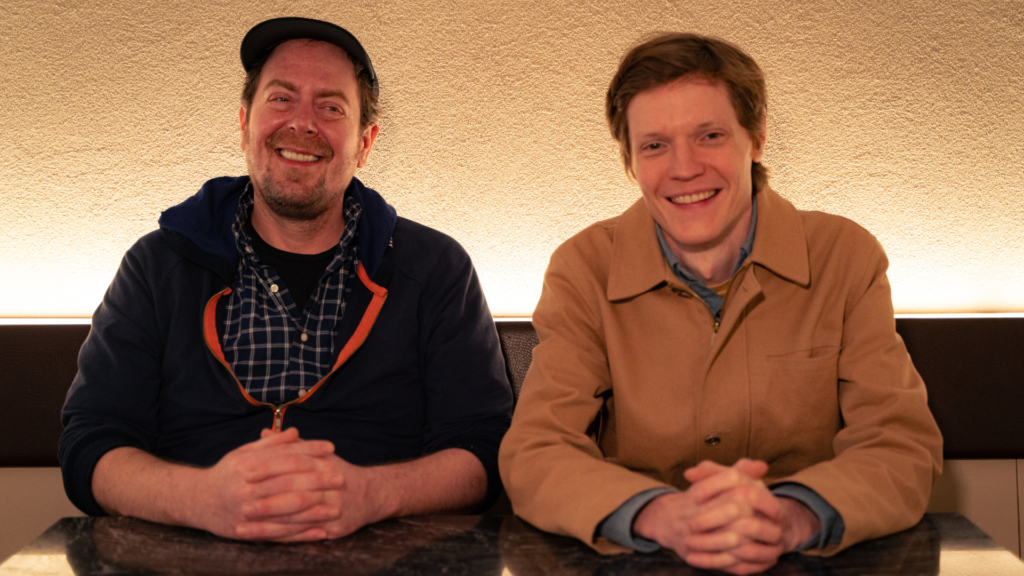
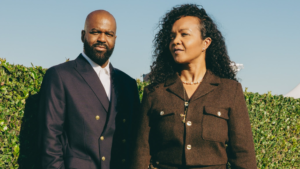
Grummert and his Co-Founder Blake Walker are not newcomers trying to make noise. Their résumés include Amor y Amargo, Nitecap, and Subject. They understand New York nightlife on a granular level. They know how guests move through a space, how conversations rise and fall, how a drink can shape the mood of a room. With Chin Up Bar, they saw an opening.
“Nobody at the time was going really deep on gin,” Walker says. “So we thought that could be a cool way to distinguish ourselves.”
The thesis is focused and confident. Gin deserves its own stage.
For many drinkers, gin has been reduced to a stereotype. Pine heavy. Aggressive. Something that reminds you of Ryan Reynolds, tolerable in a Gin and Tonic on a humid summer night and little else. Walker is quick to dismantle that narrative.
“I think that people forget that it’s the most versatile and, in many senses, most important cocktail spirit,” he says. “Juniper is the foundation, yes, but we have gins that are savory, floral, tropical, spicy, malty, citrus driven by nearly every citrus fruit you can imagine. There is a gin for nearly every moment.”
Nobody at the time was going really deep on gin. So we thought that could be a cool way to distinguish ourselves.
The Drinks
The first test of that theory arrives in the form of a Purple Negroni. It lands on the table jewel toned and luminous, catching the low light like stained glass. Structured but playful. Bitter but layered. The gin does not dominate. It converses. Each sip reveals something different. Citrus first. Then a floral lift. Then a grounding herbal note that lingers just long enough to make you want another.
An Old Fashioned follows, built around gin rather than whiskey. Familiar format. New personality. The drink feels like a classic film reimagined with a modern cast. The structure remains intact but the texture shifts. It is brighter. More aromatic. Slightly unpredictable in the best way.
Walker explains that the menu begins with history. “What are some classic cocktails that we need on our menu in order to fully represent this category? We could not open a gin bar without serving a Martini, Negroni, Gimlet.”
He is unwavering when it comes to the Martini. “The Martini is, was, and always will be the iconic cocktail.”
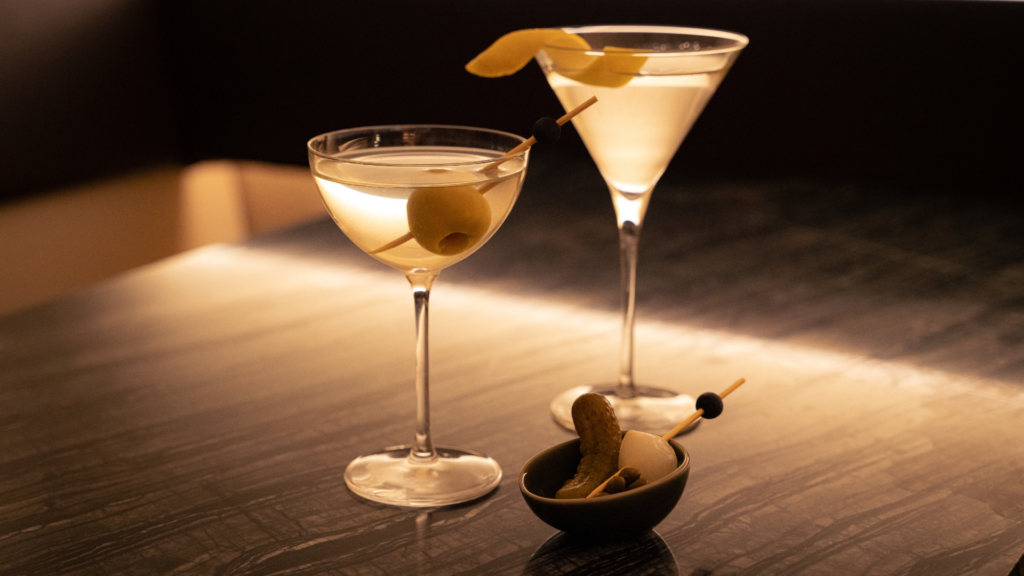
There is reverence in the way he speaks about it. Not nostalgia. Respect. The Martini at Chin Up Bar feels precise and intentional. Cold enough to command attention. Clean enough to feel architectural. It reminds you that simplicity requires discipline.
The Martini is, was, and always will be the iconic cocktail.
Then comes the Saturn. Bright. Tropical. Slightly whimsical. It opens the door to what gin can become when it is allowed to stretch beyond expectation. And then the Rendezvous in Chennai arrives, the cocktail that fully dissolves my skepticism.
The Vibe
Dorothy Parker New York gin layered with Madras curry, coconut, apricot, ginger, and lime. On paper, it sounds improbable. In the glass, it is harmony. Savory warmth from the curry. Soft creaminess from the coconut. Gentle sweetness from apricot. A lift of citrus that keeps everything buoyant. The gin ties it together with botanical clarity.
“That cocktail is actually one that I did with my friend and fellow bartender Robert Sachse,” Walker says, tracing it back to his Nitecap days. Inspired by weekly curry lunches, they set out “to concoct a cocktail with curry spices as the central idea.”
Walker admits that he likes to push flavor to its limit before pulling it back. “I find extreme flavors to be more interesting,” he says. “I love foods that are painfully spicy, sour. I will chew on a peppercorn or eat a fruit rind just to see what happens.”
His former life as a recording engineer shapes that philosophy. “When I wanted to make a specific instrument sound really good I would turn it all the way up until it overwhelmed the other parts on the track, apply a mix at that level, and then back it down.”
Balance, for him, is tension resolved. It is knowing how far you can go without losing the plot.
The Food
Hospitality is the total removal of tension for the guest
The food at Chin Up Bar reinforces that idea. It is not an afterthought. It is part of the conversation.
“You cannot conquer biology,” Walker says. “Savory flavors help keep your appetite stimulated and activated.”
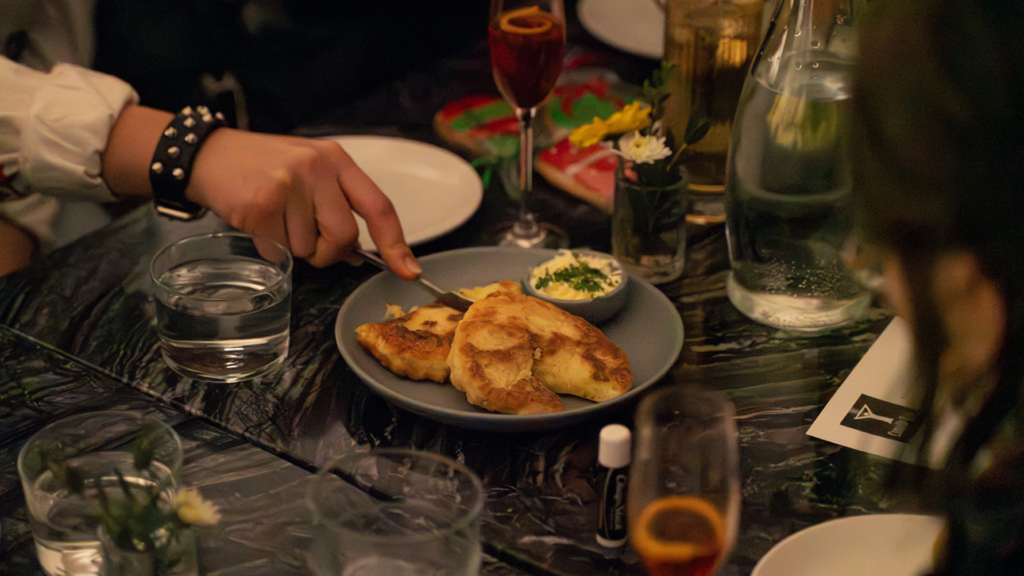
Potato bread with cultured butter arrives first. Warm. Impossibly soft. Slightly sweet. It feels comforting without being heavy. Prosciutto Tosini follows, silky and delicate, melting gently against the bread. The shrimp cocktail is clean and briny with cocktail sauce, mignonette, and lemon. Each element feels considered. Nothing competes. Everything supports.
The savory thread continues with fried clams layered with wasabi and onion crème fraîche and smoked mussels escabeche that deliver brightness and depth in equal measure. Gin and seafood, Walker notes, is “kind of a no brainer.” The botanicals cut through richness. The acidity sharpens brine. The pairing feels instinctive once you experience it.
Much of the kitchen is gluten free, though it is not announced with spectacle. For Grummert, diagnosed with celiac disease in his thirties, this approach is deeply personal.
“Hospitality is the total removal of tension for the guest,” he says. “It is a huge relief when you have a severe food allergy or an autoimmune disorder to discover it does not exist in the room.”
The Co-Founders
He understands that trust is fragile. “I cannot trust a gluten free menu anymore. I trust a server telling me that there is no gluten in the building.”
That philosophy extends beyond the plate. Even the seating has been calibrated with intention. “Blake and I spent a rather hysterical amount of time determining the exact dimensions of the seats and the tables,” Grummert admits. After years working in bars where guests are constantly bumped and jostled, they wanted movement to feel natural. You slide in without contorting. You stand up without disrupting the table beside you. The flow feels effortless.
Art is not simply hung on the walls. It is embedded into the architecture. It rises along the ceiling. It frames the bar. “It is tangible,” Grummert says. “It is part of your surroundings.”
Outside, the Lower East Side hums with unpredictability. Grummert describes it as “a movie that you could not figure out where it was going.” Chin Up Bar does not attempt to outshine that energy. It refines it. It creates a pocket of clarity within the chaos.
“I like the idea of places being both exciting and relaxing,” he says. “You should feel comfortable and also have fun.”
By the time we finish the Saturn, I realize something quietly radical has happened. I am not tolerating gin. I am savoring it. The spirit I once dismissed as sharp and singular reveals itself as layered and expressive. Botanical. Savory. Bright. Unexpected.
On a freezing New York night, Chin Up Bar warmed me up before the alcohol ever could. It reframed a spirit I thought I understood. It made seafood and botanicals feel inevitable together. It proved that intention does not have to translate into stiffness. And it reminded me that sometimes the most exciting move in a city that has everything is choosing to focus on one thing and execute it exceptionally well.
Read More
Nightlife + Dining
Julianne Beffa