Exclusive
How Eli Brown is Shaping the Future of Techno Worldwide
Eli Brown is redefining modern techno with his breakout track Gotta Go, headlining global festivals and keeping rave energy alive in every set.
- By: Julianne Elise Beffa / Photography By: Gavin Harris & Ethan Karlin

Eli Brown isn’t just a DJ. He’s the pulse of the modern techno movement, the kind of artist whose name alone can set a room on fire before a track even drops. Over the past few years, he’s gone from underground circuits to headlining the biggest festivals in the world: Coachella, EDC Las Vegas, Tomorrowland, and Ultra all while maintaining a deep-rooted credibility with the communities that first embraced him. Now, coming off the breakout success of his peak-time weapon “Gotta Go,” Eli is not just riding a wave, he’s shaping it.
At first glance, the trajectory seems meteoric, but for Eli, it’s been about patience, precision, and an unrelenting focus on the dancefloor. “I think the main thing is I’m less desperate to prove something and more obsessed with getting it right,” he explains. “When I first started, I’d finish a tune and be buzzing just because it was finished. Now I’ll sit with something for weeks, play it out, hate it, go back, change it, test it again. I’m very self-critical, and honestly I still get nervous road-testing brand new music, but I’m trusting the process more. I’ve stopped chasing what I think people want and started chasing what I’d want to hear if I was on the dancefloor.”
This meticulous approach has defined his work for years, but nowhere is it clearer than in “Gotta Go.” A track born around EDC Las Vegas, Eli and collaborator Danny Avila kept the record under wraps, road-testing it in underground clubs before unleashing it on larger stages. “The night after EDC, I played it in Philadelphia at a small underground club called The Ave, and it immediately felt right,” Eli recalls. “I still treated it as a test rather than a finished moment. The real turning point was my Brooklyn Storehouse show. The reaction there was insane, and that’s when I knew it wasn’t just working in my head anymore, it was working in real life. When a record connects like that in a room of that size and intensity, you stop questioning it and trust what the dancefloor is telling you.”

The magic of “Gotta Go” isn’t just in its driving techno grooves, it’s in its emotional architecture. Eli describes it as a blend of “powerful vocals and gritty techno… From the moment SACHA’s vocal cuts in, there’s this raw, commanding energy. Combined with the driving drops and hypnotic groove it creates this tension and release that people can feel.” That tension-release formula has become a hallmark of Eli’s style, one that he carefully curates for both underground dens and sprawling festival stages.
Speaking of festivals, Eli is now preparing for his “Gotta Go” European Tour, bringing his signature high-energy narrative to cities that have been waiting for him. “It’s all about tension and pacing,” he explains. “Anyone can smash people with bangers for two hours, but the best nights have pressure- moments where you hold back and let the groove do the work. ‘Gotta Go’ is one of those records that’s like a switch, so I’m thinking about how you build towards that switch rather than just throwing it in early. Different cities have different personalities, so sometimes you can go darker for longer, sometimes people want it more upfront, but the identity stays the same: high energy, raw, and physical.”


Even as he conquers festival mainstages, Eli never loses sight of the club scene that shaped him. “I don’t think about it as ‘underground vs mainstage’ when I’m making music,” he says. “I’m still trying to make records that would work in a sweaty warehouse at 4am. If it can survive there, it’ll survive anywhere. The difference with festivals is the pacing- you might make the big moments a bit clearer, because not everyone in that crowd is a techno head. But I’m not interested in watering it down. I actually like the challenge of bringing that raw energy to bigger spaces and seeing how far you can push it without losing the plot.”
I’m still trying to make records that would work in a sweaty warehouse at 4am. If it can survive there, it’ll survive anywhere.
Eli’s ability to straddle these worlds is part of a broader cultural resurgence of techno. He notes that crowds today are more open to emotion and energy than strict genre definitions. “You’ll see people who might not call themselves techno fans completely locked into a peak-time moment, and that’s powerful. For me, it’s about creating that connection on the dancefloor. If it hits right, labels don’t really matter.” That connection is at the core of his artistry—a commitment to music that is both immediate and memorable.
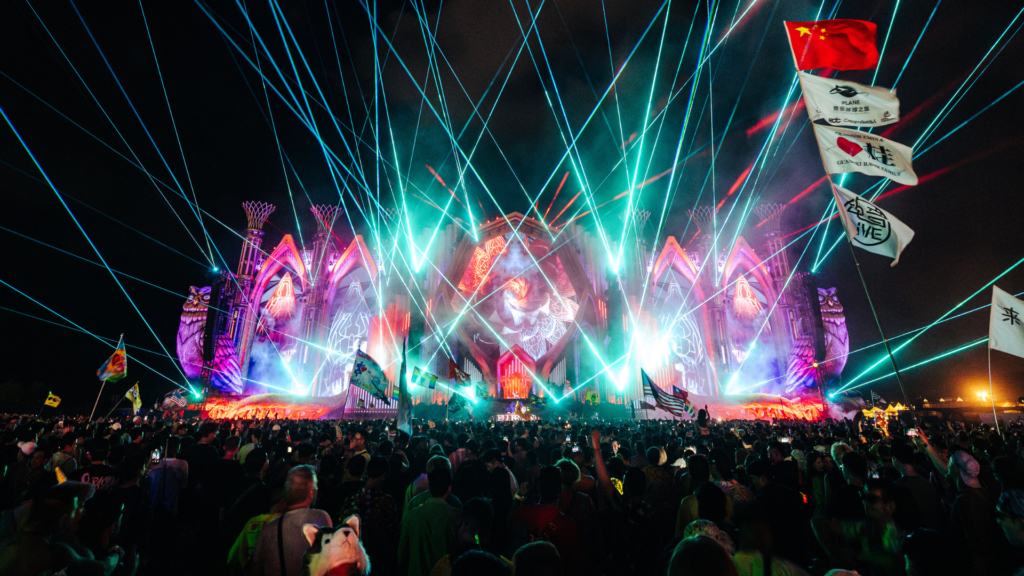
That ethos traces back to his roots in the UK, where rave culture, jungle, and drum & bass informed his early understanding of rhythm and energy. “The rave spirit to me is about doing something bold and memorable, not overthinking it, and not being scared of big moments. Growing up in the UK, rave and jungle/DnB energy was in the air, and it was always raw—a bit naughty, but fun. That’s what I want to capture: music that makes you move immediately, but also sticks in your head the next day.”
This duality- old-school rave energy and forward-thinking sound design—is evident in how Eli approaches production for both clubs and festivals. “I test everything for months; the dancefloor tells you the truth straight away. If it works in a dark club where people are properly locked in, it’ll translate to a big stage. The opposite isn’t always true, so I always start with the club in mind.” That dedication to authenticity explains why tracks like “Gotta Go” resonate across such varied audiences: underground heads, festival-goers, and casual listeners alike.
The rave spirit to me is about doing something bold and memorable, not overthinking it, and not being scared of big moments
Eli’s upcoming Skyline Music Festival in LA exemplifies this balance. “I love LA,” he says. “They want energy, but they also actually listen. It’s been a little while since I’ve played there, so coming back feels big, and Skyline is perfect for it because it sits in that space between festival scale and proper underground taste. I’m treating it like a statement set, bringing new music, taking a few risks, and giving the city what it deserves. LA always gives me a lot, so I like to give it back.”

Part of that commitment to pushing boundaries comes from running his own label, Arcane, which has allowed Eli to bridge underground and mainstream worlds on his own terms. “It’s made me more disciplined and more picky. When it’s your label, you can’t blame anyone else. You either believe in something or you don’t. My approach is simple: will it fit in my sets, and does it excite me? If the answer is no, it doesn’t come out, even if it’s ‘good’. Arcane also keeps me plugged into what’s happening, because I’m constantly listening to new music and thinking about where the sound is going, not just what’s working right now.”
Despite viral success and streaming numbers, Eli remains a staunch advocate for the physicality of music. “It’s everything. I make club music, so the dancefloor is the only real judge. I’ll play a tune out for months and only the top few survive. Most tracks never see the light of day. Streaming is cool, obviously, but it doesn’t change how I work.” This obsession with audience response is not just about numbers—it’s about crafting moments that are felt, not just heard.
Even as techno enjoys renewed attention globally, Eli sees it as part revival, part evolution. “The spirit feels like a revival. That hunger for proper rave energy is definitely back. But the scale and the reach is new. Techno used to be something you had to go looking for, and now it’s in way more places, with way more eyes on it. That’s not automatically a bad thing, it just means you have to work harder to keep it raw and honest. I’m more interested in pushing it forward than arguing about what era we’re in.”

His approach to curation, production, and performance reflects a consistent philosophy: it’s about the dancefloor first, the festival second, and the narrative third. “When someone walks into one of my sets for the first time, I want them to feel like they were part of something real, not just watching a show. Sweaty, wired, a bit wrecked, and happy about it. And I want them to leave with at least one moment stuck in their head, like ‘what was that tune?’”
Looking ahead, Eli is building toward his debut album, a project that remains under embargo but promises to continue his mission: reconnecting with the original rave spirit while pushing techno forward with club, drum & bass, and modern rave influences. It’s music built for peak-time rooms and large-scale stages alike, designed to bridge the intimacy of the underground with the spectacle of the festival.
In many ways, Eli Brown represents the modern techno artist at his best: self-critical yet fearless, rooted yet exploratory, underground yet global. His trajectory isn’t just about headlining marquee festivals—it’s about defining what peak-time music feels like right now, and where it’s going next. “I want to make nights that matter,” he says. “Music that hits the floor immediately, but also sticks with you. That’s what keeps me going.”
Whether you’re packed into a dark basement club in London, standing shoulder-to-shoulder at Skyline in LA, or watching the sunrise over Tomorrowland, Eli’s music demands attention, movement, and memory. He’s not just spinning tracks—he’s shaping the moment, and in the process, shaping techno itself.
From “Gotta Go” to his forthcoming album, Eli Brown isn’t following the techno wave; he’s creating it, one floor-shaking drop at a time.
Read More


Nightlife + Dining
Ani Gutierrez