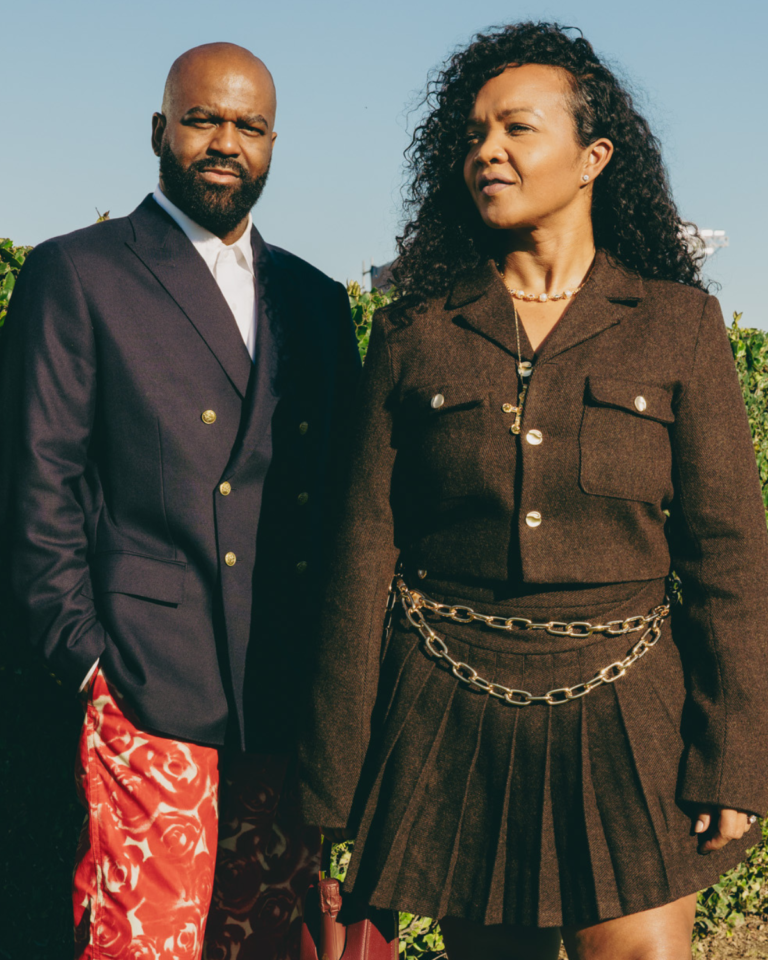
They’re Making Lambrusco Sexy Again: Meet Saint Enzo Founders Myisha and Armon Moore
Saint Enzo is putting a modern luxury spin on Lambrusco, blending Italian winemaking tradition with fashion, hospitality and a whole new way of thinking about sparkling red wine.
- By: Julianne Elise Beffa
The way we drink has become inseparable from the way we live. A bottle is no longer just a bottle, especially at the luxury end of the market. What we order, bring to dinner or pour for friends has become wrapped up in taste, identity and the increasingly important question of whether a product gives us something to talk about. The modern consumer wants provenance, certainly, but they also want a story. Today’s drinkers want the bottle that prompts questions from across the table and to order the one that feels as considered as the restaurant reservation, the menu and the people gathered around it.
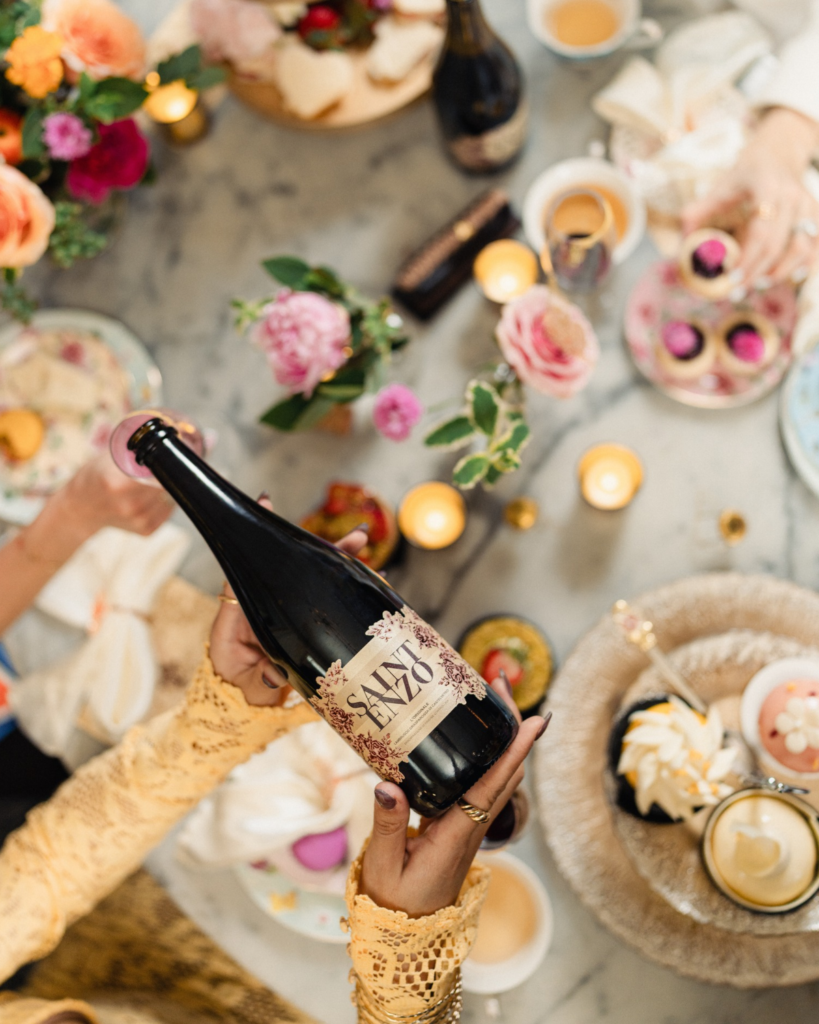
Thankfully, Saint Enzo was built for that consumer. The luxury sparkling red wine, founded by Myisha and Armon Moore after six years of development, is made in Italy from 100% organic Lambrusco Grasparossa grapes, but its ambitions stretch far beyond the traditional wine aisle. With a striking bottle, fashion-minded accessories (I’m obsessed with the bag- keep reading to shop!) and a growing presence in intimate cultural and hospitality spaces, Saint Enzo is making a case that the future of luxury wine may have less to do with where a bottle sits on a shelf than with where it shows up in real life.
For Myisha, whose background is in luxury brand marketing, the opportunity began with a simple observation: while food culture, fashion and hospitality have increasingly learned how to speak to consumers through experience and identity, the wine industry has often remained attached to an older language. “The gap I saw was cultural. The wine industry had spent decades building a world that was predominantly male, intimidating, and frankly not speaking to the women who are actually buying most of the wine,” she says. “This particular woman is culturally forward, has taste, invests in her lifestyle and the brands she was being offered felt like they were not designed specifically for her.”
That disconnect became the starting point for Saint Enzo. Myisha had spent years watching luxury brands build relationships with consumers that extended far beyond the product itself, and she believed there was room for a wine brand to do the same. “I had spent years in luxury brand marketing learning that the most powerful brands do not just sell products. They sell identity. They sell belonging so when I looked at the wine category I saw a gap for women who were ready to belong to something that reflected who they actually are and nothing existed,” she says.
The founders’ choice of Lambrusco only made that challenge more interesting. The wine has a long and storied Italian history, yet its reputation in the American market has been shaped for decades by a narrow and often inaccurate understanding of what Lambrusco can be. Rather than treating that reputation as an obstacle too large to overcome, Myisha saw a category that had been badly positioned and, therefore, a chance to introduce consumers to something they might not realize they were missing.
“Lambrusco specifically had an additional problem. It had been so badly misrepresented in the American market that most people did not even know what it actually was. The original expression dry, complex, and sparkling had been buried under decades of sweetened mass-marketed versions. That is not a category problem. That is a marketing problem. And marketing problems are exactly what I was trained to solve,” she says.
...when I looked at the wine category I saw a gap for women who were ready to belong to something that reflected who they actually are...
Her approach was not to lead with everything consumers might already think they know about Lambrusco. Instead, Saint Enzo presents itself first as a luxury sparkling red wine, allowing the grape’s history and origin to become part of the experience rather than asking consumers to work through their assumptions before they ever take a sip. “The first thing I had to do was separate Saint Enzo from the category perception entirely. Because if I positioned Saint Enzo as a Lambrusco I was immediately inheriting every misconception that came with that word. So instead I positioned Saint Enzo as a luxury sparkling red that competes with Champagne and let the origin story come after the experience,” Myisha explains.
That strategy also gives the wine an element of surprise, which is increasingly valuable in a marketplace where consumers are inundated with choices and always looking for something they can introduce to their own circle. “When someone tastes Saint Enzo for the first time and loves it and then I tell them it is Lambrusco that is the conversion moment. Their entire perception of the category shifts in that single instant. That surprise is not just a nice to have. It is the brand strategy,” Myisha says.
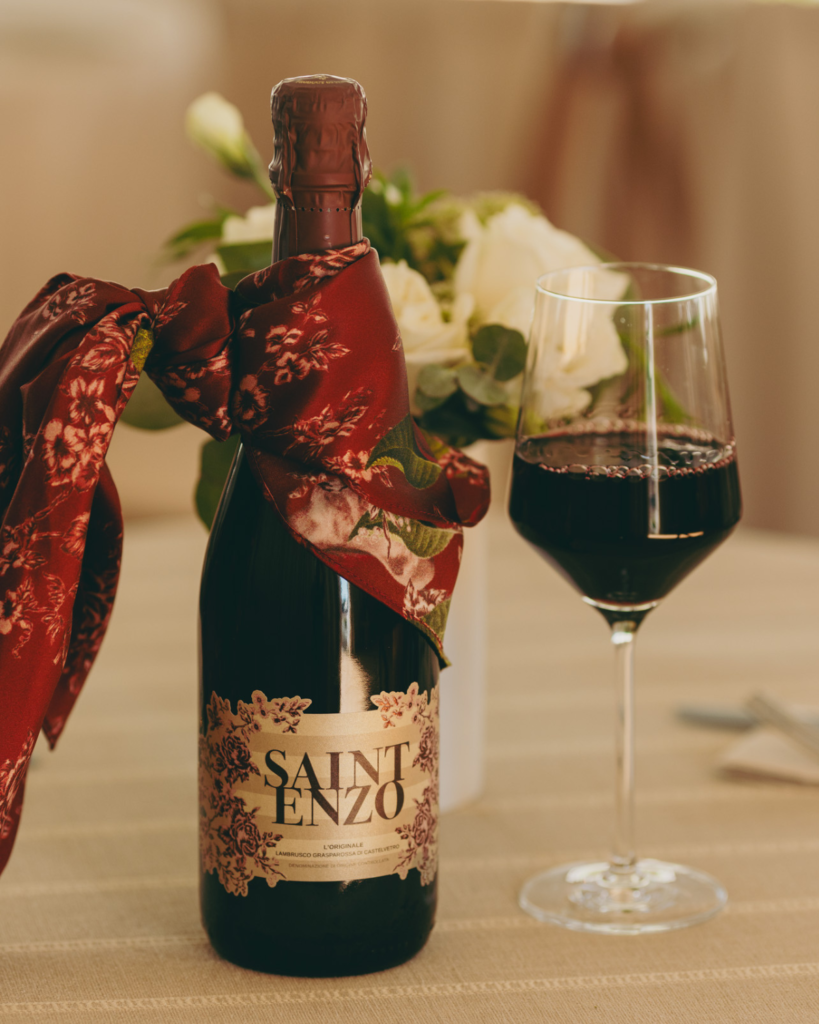
Armon approached the same question of perception from another direction: design. Before a bottle is ever opened, he believes the consumer has already begun forming an emotional relationship with it through a series of small interactions that can easily be overlooked. The weight of the bottle, the materials, the typography and its overall proportions all communicate something before the wine reaches the glass, which is why Saint Enzo’s visual identity was treated as part of the product experience rather than a decorative layer added at the end.
“I think luxury starts with intention. Before anyone tastes Saint Enzo, they’ve already had several interactions with it. They’ve seen the bottle. They’ve held it. They’ve felt the materials. They’ve noticed the typography, the proportions, the weight, the restraint. All of those details are communicating something before the cork ever comes out,” Armon says. “When I approached the design, I thought about that as the ‘experience before the experience.’ Years of designing products taught me that people begin forming an emotional relationship with something long before they actually use it.”
Years of designing products taught me that people begin forming an emotional relationship with something long before they actually use it.
For Armon, that intention extends well beyond the bottle itself. Saint Enzo’s leather wine bag, silk accessories and packaging are all meant to make the product feel integrated into someone’s lifestyle, particularly after it has left the store or arrived at a gathering. “In traditional wine, packaging often ends at the point of purchase. We wanted the experience to continue into your life. The wine bag is reusable by design. You carry it. You style it. You arrive somewhere with it,” he says. “The bottle is not the end of the experience. It is the beginning.”
That perspective helps explain why Saint Enzo has embraced fashion, hospitality and cultural experiences as part of its identity. Myisha says she deliberately chose to think of Saint Enzo as a fashion and lifestyle brand first, using the wine as an entry point into a larger world rather than limiting the brand to traditional wine marketing. “The second thing I did was treat it as a fashion and lifestyle brand first and a wine brand second. The wine bag, silk scarf, equestrian events and membership club activations around birthday’s. None of those feel like wine marketing because they are not. They are lifestyle marketing that happens to include wine. That distinction is everything when you are trying to reframe a category,” she says.
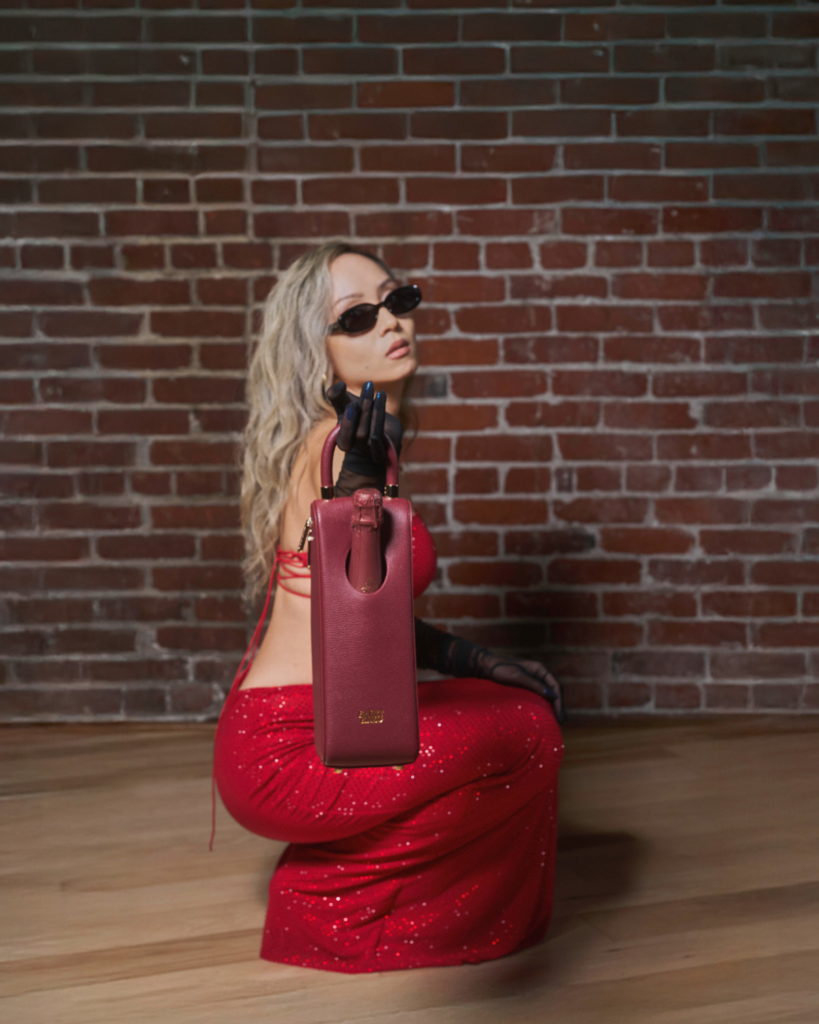
That world was built around a very specific consumer. “I started with the woman. Not the product. Not the category. The woman,” Myisha says. “I asked who she is, how she moves through the world, what she already values, and what brand could feel like it was built specifically for her. She is 28 to 45. She is a tastemaker in her community. She sets the table for everyone else. She invests in experiences over things. She is the woman who shows up to the dinner party with the bottle nobody has heard of and by the end of the night everyone is asking where to get it.”
Once that woman was clear, Myisha says, the rest of the Saint Enzo universe began to take shape around the details and occasions that matter to her. “Once I understood her deeply I could build the world she wanted to belong to. The coupe over the stemless glass because she does not compromise on the ritual. The silk scarf because the wine lives in her lifestyle, not just her glass. The equestrian activation because she shows up at the cultural moments that are rare. Everything in the Saint Enzo world is a signal to that specific woman that this brand was made for her. And when the right woman feels that she does not just buy the wine. She embodies the brand.”
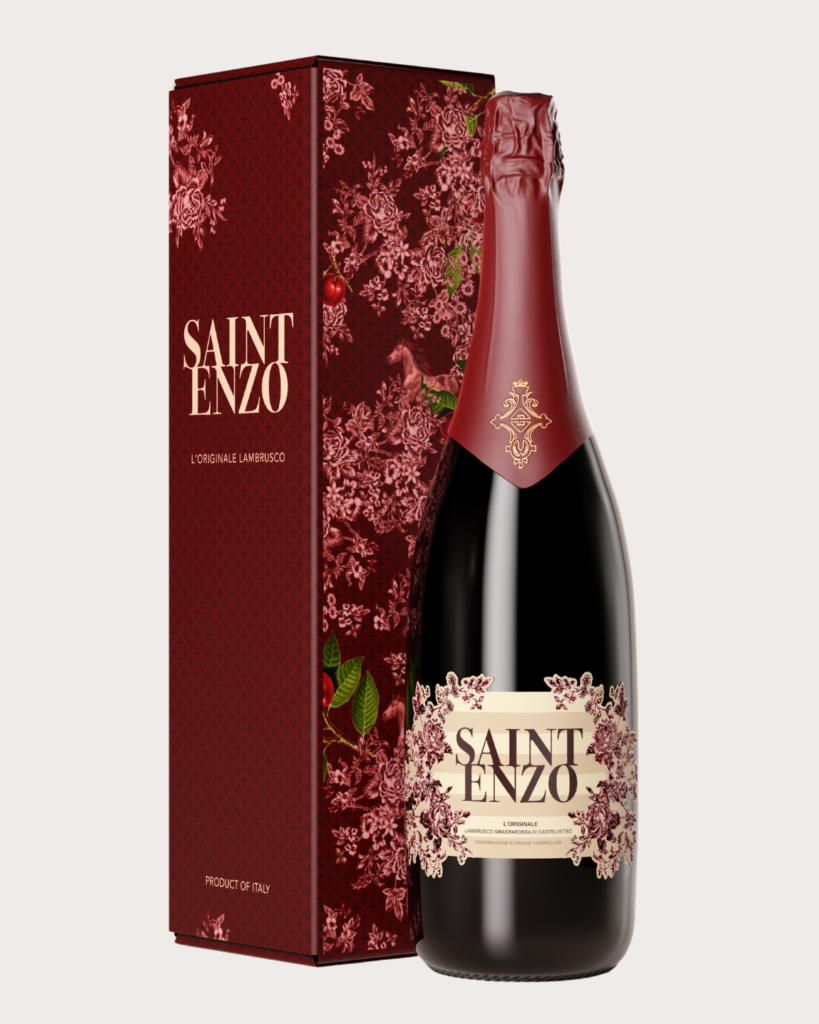
$85
Saint Enzo
L’Originale Lambrusco
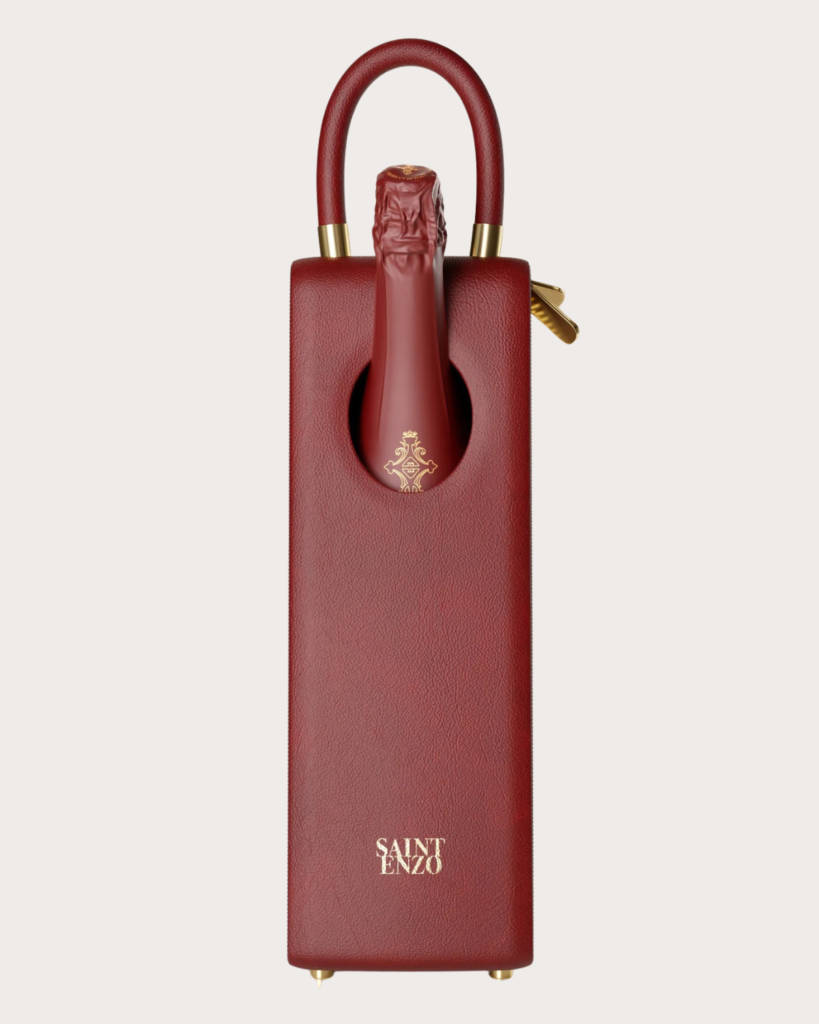
$220
Saint Enzo
Wine Bag + Bottle
The idea that a beverage should live within an experience, rather than simply be consumed during one, is particularly relevant as alcohol discovery continues to move beyond traditional retail. Restaurants, hotels, private clubs, sporting events and cultural gatherings have become increasingly important places for consumers to encounter brands in a setting that provides context and emotion alongside the product itself. For Saint Enzo, those real-world moments are not a supplementary marketing strategy; they are central to how the founders envision building the brand.
“Real-world experiences. Without question,” Myisha says when asked where luxury beverage brands have the greatest opportunity to build relationships with consumers. “Digital is where people discover you. Retail is where people access you. But experiences are where people fall in love with you. And the brands that will win the next decade are the ones that understand the difference between those three things.”
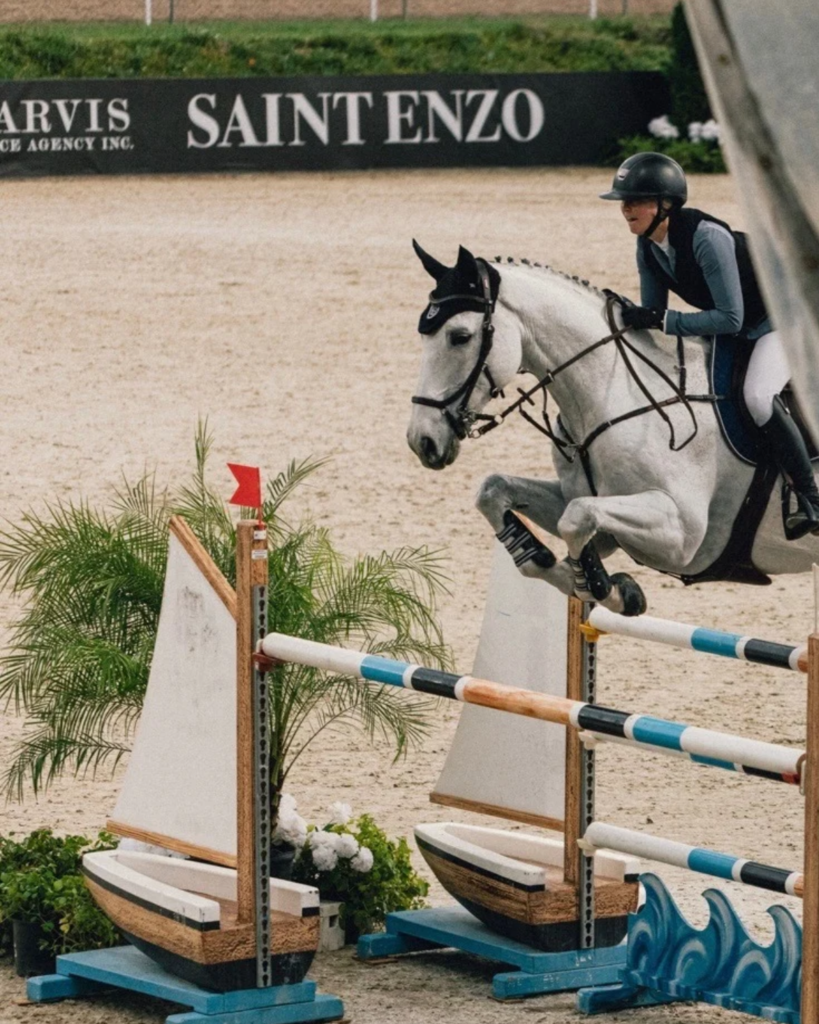
The founders have found that Saint Enzo’s most meaningful moments of discovery often happen in smaller, more carefully curated spaces rather than the largest possible room. “The biggest opportunity right now specifically is in the niche room. The biggest luxury moments are not happening in flagship stores or at mass events. They are happening in small curated rooms where the right fifty people are gathered. A private dinner. An art opening. A boutique hotel experience. A VIP suite. Those are the rooms Saint Enzo is building presence in because that is where our target audience is showing up,” Myisha says.
The couple takes that philosophy even further when discussing the role of hospitality in Saint Enzo’s future. “They are everything. And we say that not as a marketing philosophy but as lived experience,” they say. “The consumer who discovers Saint Enzo at a VIP suite, at an equestrian event, at a private tasting inside a luxury boutique that consumer does not just try the wine. They have an experience that becomes part of how they remember that day. And the brands that become part of someone’s best memories do not need to spend as much on traditional advertising because the memory does the work.”
That is why the founders say they have chosen “presence over placement,” prioritizing the right environment and audience over simply trying to achieve the broadest possible distribution as quickly as possible. “Being in the right room with the right people at the right moment generates a depth of connection that no shelf position can replicate,” they say. “When someone tastes Saint Enzo for the first time in a setting that already feels elevated, a private club, a luxury hotel, a cultural event the wine inherits the emotion of that moment.”
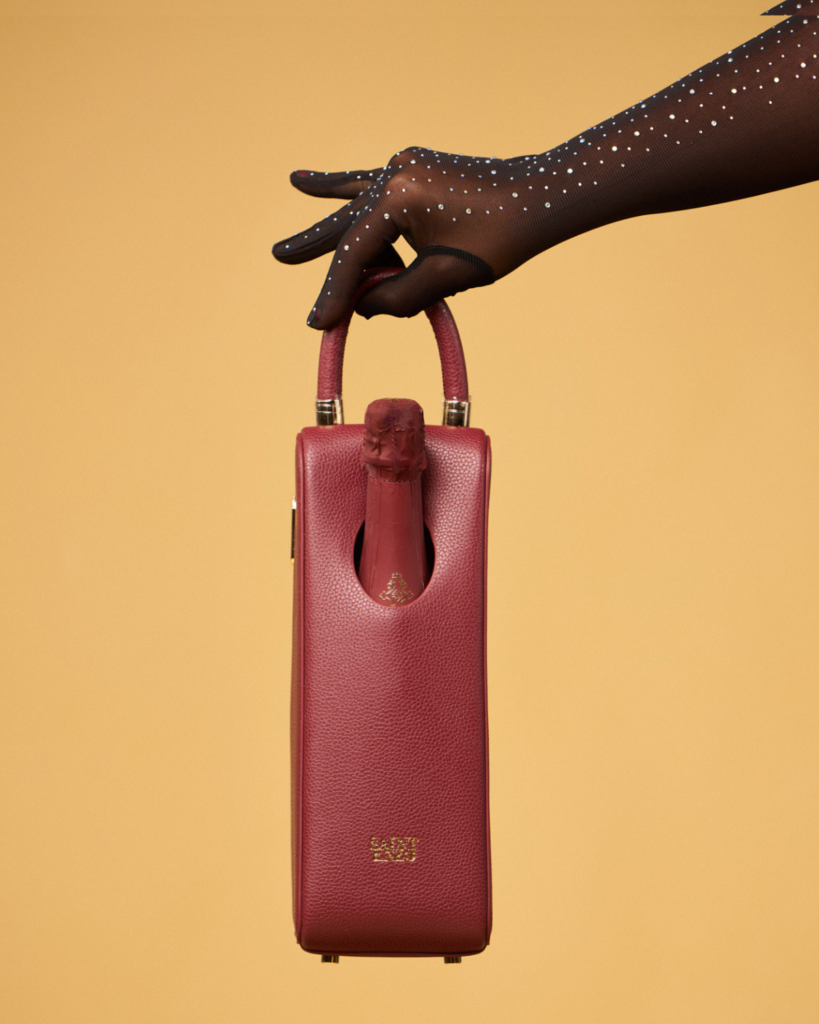
There is also something more personal beneath Saint Enzo’s polished exterior. The name itself combines a nod to Italian heritage with a tribute to the couple’s son, Enzo, making the brand a love story in more ways than one. After six years spent developing the wine and the world around it, the founders have created something that is rooted in traditional Italian winemaking while deliberately placing itself in a contemporary cultural conversation.
That balance was essential to Armon, who never saw modernizing Saint Enzo as an excuse to abandon the traditions that made the wine special in the first place. “It was incredibly important. The opportunity was to take something with generations of history behind it and reintroduce it in a way that changed how people experienced and understood it,” he says. “With Saint Enzo, we preserve the integrity of the winemaking, the land, the grape, and the traditions of Emilia-Romagna, while creating a completely contemporary world around it.”
For him, that contemporary world is ultimately about the way people gather. “There’s a line on the back of every bottle: ‘Raise a glass to mornings that linger into afternoon and beyond.’ That really captures what we designed Saint Enzo to create,” Armon says. “It’s about those moments when the conversation is so good, the company is so right, and no one is quite ready for it to end.”
Raise a glass to mornings that linger into afternoon and beyond.
That may just be the most compelling part of Saint Enzo’s larger argument. The brand isn’t just asking consumers to give Lambrusco another chance; it is asking them to reconsider what role a bottle can play in the first place. A wine can be rooted in generations of Italian tradition while feeling at home beside a chef’s table, at a boutique opening or in a beautifully packed wine bag on the way to dinner. It can be something you discover, something you talk about and eventually something you associate with a particular group of people, a particular place or an afternoon you weren’t ready to let end.
For the Moores, that separates a product from a cultural brand. “I think the brands that become cultural icons give people something bigger to believe in than the product itself. The product has to be exceptional, but that’s the starting point. What creates loyalty is the meaning people attach to it,” Armon says. “A product can earn a place on a shelf. A cultural brand earns a place in people’s lives.”
Saint Enzo’s first release reportedly sold out within minutes, suggesting that the founders may have identified a consumer who was ready for exactly this kind of wine brand. Whether Lambrusco itself is poised for a broader luxury revival remains to be seen, but Saint Enzo has already made one thing clear: the next chapter for the category will not necessarily be written by pretending its past doesn’t exist. It may come from introducing the wine to a new generation of drinkers and giving them an entirely different reason to care about what is in their glass.
Read More

Exclusives
Julianne Beffa