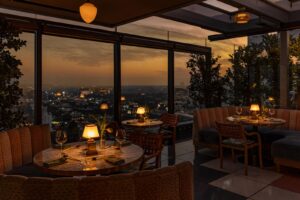
How Michael White & Bruce Bronster Are Shaping Luxury Dining With BBianco Hospitality
From New York’s Santi to Coral Gables’ MIKA, chef Michael White and Bruce Bronster are building a hospitality vision rooted in thoughtful details, exceptional food and a fresh perspective on luxury.
- By: Ani Gutierrez
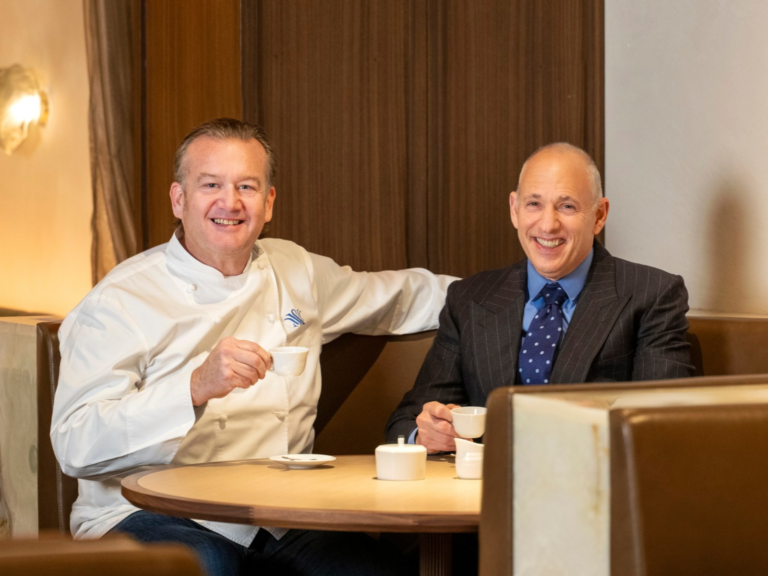
Luxury dining has a reputation to uphold. There are the reservations you plan weeks in advance, the bottles you order for the table and the restaurants where getting dressed up is essential to the experience. Chef Michael White has a slightly different idea of what makes a restaurant worth your time, though, and it has nothing to do with whether you showed up in designer heels or your favorite pair of jeans.
His philosophy? Truffles and blue jeans.
“That’s really how I define luxury right now: truffles and blue jeans. People are looking for a more experiential, less traditional kind of luxury,” White told LOOP in an exclusive interview. “You don’t have to be stiff or overly formal. I want you to come in and use the restaurants how you want. You don’t have to get dressed up to eat amazing food.”
It sounds simple enough, but that mindset says a lot about what White and his business partner, Bruce Bronster, are building through BBianco Hospitality Group. Across markets including New York, Miami, Dallas, Puerto Rico and the Bahamas, their approach to hospitality puts the food first without treating the rest of the experience as an afterthought. They’re creating restaurants where the cooking is serious, the tiniest details make the atmosphere feel just right, and guests have a reason to come back long after the first reservation.
Take Santi in Midtown Manhattan and MIKA in Coral Gables, Florida. Both draw from White’s decades of experience in Italian cooking, but neither is trying to replicate the other.
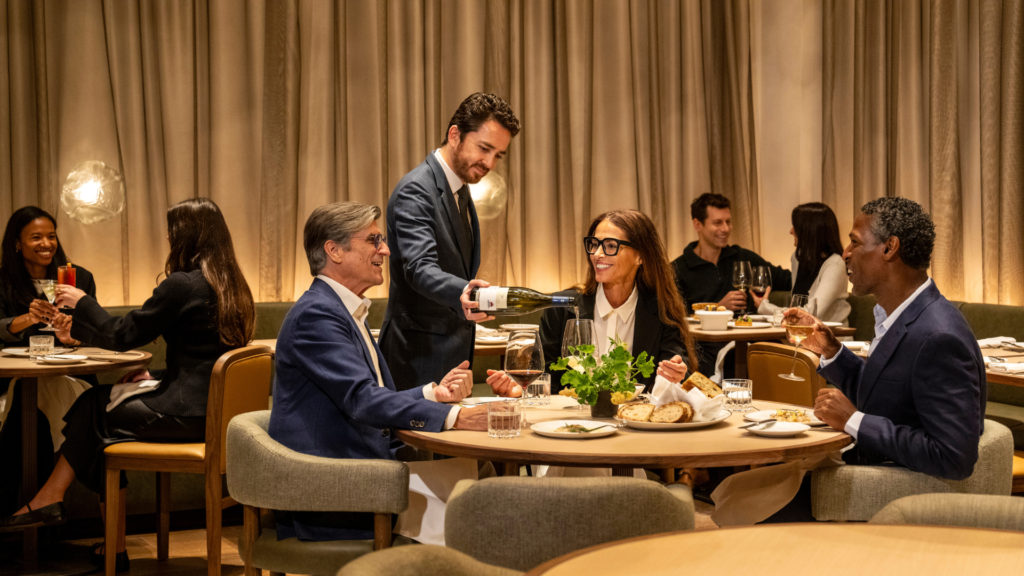
Santi is a culinary flagship that feels personal to White, while MIKA brings that same attention to technique into a more relaxed, Mediterranean-influenced neighborhood setting.
Although spanned across different cities with different moods and different reasons to book a table, the common denominator is how you feel when you leave.
“It all comes down to how you make people feel when they’re here, and when they leave the restaurant,” says White.
For him, that is where a great restaurant begins to separate itself from somewhere that simply serves a great meal.
I want you to come in and use the restaurants how you want. You don't have to get dressed up to eat amazing food ... It all comes down to how you make people feel when they're here, and when they leave.
Santi and MIKA have Different Moods, but the Same DNA
In a city like New York, where the next restaurant everyone needs to know about is always around the corner, Santi has a particularly clear identity. The Midtown restaurant is White’s culinary flagship, serving as a reflection of over 35 years spent in professional kitchens and a place where his Italian cooking philosophy takes center stage.
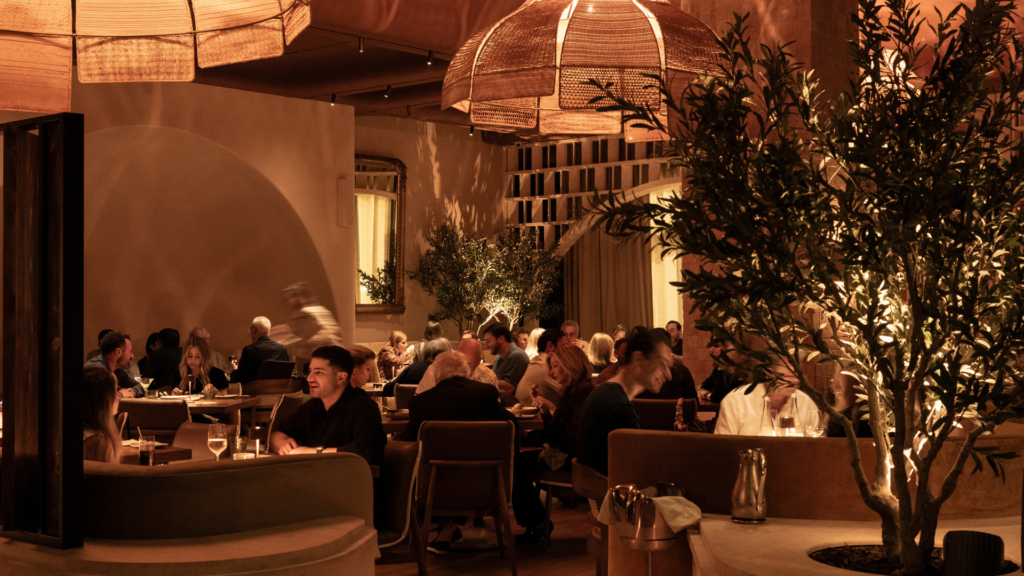
The interior has the warmth of a private Italian residence, elevated with the magnificence of a grand staircase and a portrait-lined wall. Those personal touches feel fitting for a restaurant so closely tied to its chef, while the atmosphere strikes a balance between refined and inviting, giving guests room to settle in without the formality of a traditional fine-dining experience.
Santi can be a business lunch destination one afternoon, and a birthday dinner setting that evening. Its ability to move between those occasions without losing its identity is part of the appeal. The atmosphere feels like it’s considered in luxury, but is still somewhere people can settle in, order another dish and enjoy the company they came with.
The food gives guests plenty of reasons to do exactly that. Santi was named in New York Magazine’s list of the 43 best restaurants in New York City, with recognition for its pasta. Among the dishes that capture its approach are handmade tortellini served in Parmigiano-Reggiano crema and red prawn crudo made with Montauk red prawns, caviar and pickled mushrooms.
The tortellini alone sells approximately 40 to 50 portions between lunch and dinner. That kind of repeat ordering is a pretty convincing argument for letting the pasta speak for itself.
The crudo, meanwhile, brings together ingredients from land and sea in what White describes as mare monte, or sea and mountain. It’s a dish that shows off the kitchen’s precision without making the guest work too hard to appreciate it.
That distinction matters to White. He wants people to experience the thought behind the food, not feel as though they need a lesson before they can enjoy it.
“I don’t want to say it’s more gourmet,” White says of Santi, “but in the sense that it’s a hair more serious.”
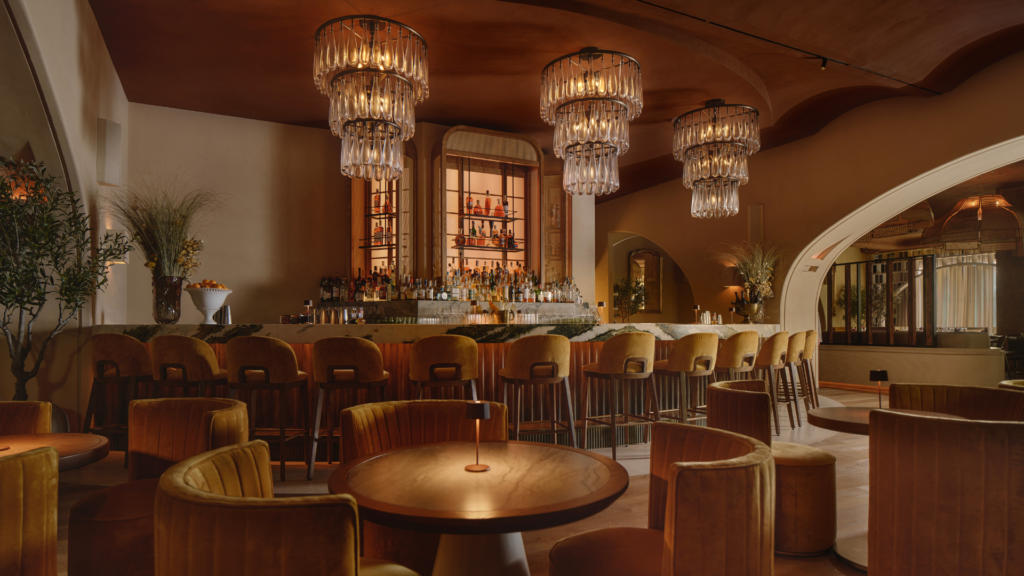
MIKA takes that same culinary foundation somewhere a little more relaxed. Located in downtown Coral Gables, the restaurant serves a neighborhood that includes offices, banks and residential communities, making it a natural setting for everything from a casual lunch to a birthday celebration or family gathering.
White describes MIKA as lighter in atmosphere, with a wider range of Mediterranean ingredients shaping the menu. Italian technique remains in the center, but ingredients such as za’atar and cilantro give him room to explore beyond the boundaries of strictly Italian cooking. Grilled seafood, whole baked branzino and grilled meats share the spotlight with pasta, creating a menu that feels equally suited to a table splitting several plates or someone who has arrived knowing exactly what they want.
That flexibility is intentional. MIKA is designed for people to make it their own, whether they’re stopping in for dinner, after work, or gathering a group for a special occasion.
“I have a saying that I really adhere to, and that is truffles and blue jeans,” says White.
The phrase works for both restaurants because it gets at something that luxury dining can sometimes lose sight of: people want to enjoy themselves. They want beautiful ingredients, thoughtful service and a room that feels special, but they also want to feel comfortable enough to return on an ordinary Tuesday.
Santi and MIKA share the same culinary DNA, but their personalities are distinct. Santi is a more personal expression of White’s Italian cooking, while MIKA gives him room to experiment with a wider Mediterranean influence. Neither relies on formality to communicate quality.
For anyone who takes pasta seriously, that shared foundation is worth paying attention to, regardless of which city they happen to be dining in.
That’s really how I define luxury right now: truffles and blue jeans. People are looking for a more experiential, less traditional kind of luxury ... You don’t have to be stiff or overly formal.
The Details You Don’t See Are the Ones You Feel
There’s a difference between a restaurant that looks expensive and one that actually understands luxury. The first might have beautiful interiors and a wine list full of bottles that make you check the price twice, but the second understands that the experience begins long before the first course even arrives.
White is particularly interested in the details guests might never consciously notice. At Santi, the music changes throughout the evening, with different playlists scheduled for 6, 7 and 8 p.m. Lighting is adjusted at specific times, too, with the team even accounting for daylight saving time to maintain the right atmosphere as the seasons change.
It’s a level of precision that sounds almost obsessive until you consider how much the mood of a room can actually influence a good night out. Nobody wants to feel like they’re eating dinner under office lighting or shouting across the table because the music is too loud. The best restaurants understand how to get those details right without making the guest think about them at all.
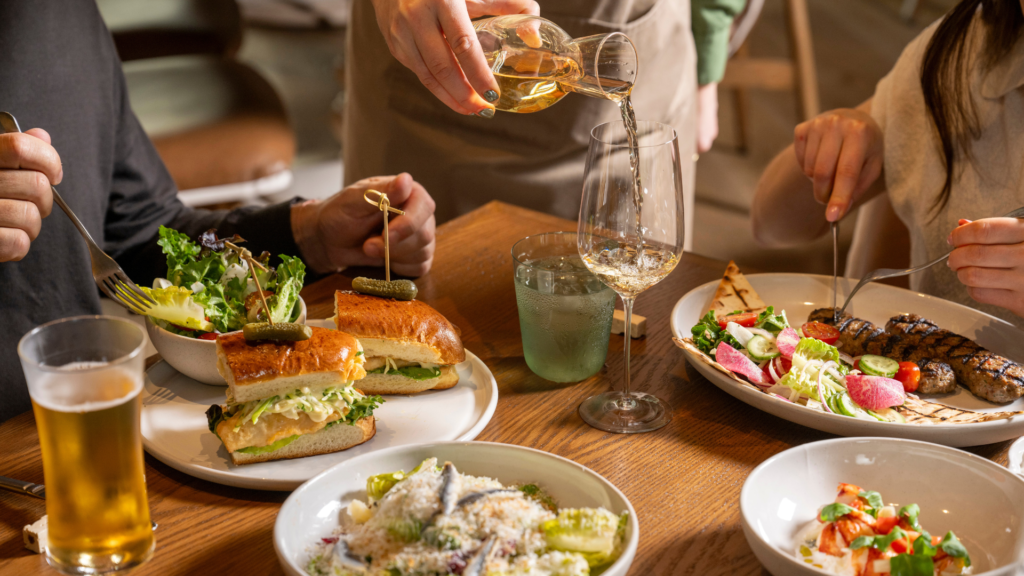
Then there’s the glassware. Santi and MIKA use the same beautiful, thin wine glasses, even though MIKA has a more casual atmosphere. For White, the quality of the experience should not depend on whether a guest has ordered an expensive bottle.
“If somebody’s going to be spending $300, $400, even $1,000 on a bottle of wine,” White says, “they’re not going to be drinking it in a shitty glass.”
Fair enough.
The same thinking extends to the smallest gestures of hospitality. Birthday cards are handwritten and placed on tables. Returning guests are recognized when they walk out. Their birthdays are remembered, sometimes with a complimentary drink waiting for them when they return.
These aren’t just random acts of attentiveness reserved for particularly generous guests. White says the team follows daily standard operating procedures designed to make this kind of recognition part of the culture.
“We have these SOPs every single day that just become part of our team members’ DNA.”
It’s a useful distinction in an industry where luxury can sometimes feel transactional. Spending money should get you a good meal, but genuine hospitality is what makes you feel that the restaurant was actually paying attention to you as a person, and that can sometimes be rare to come across.
That philosophy extends into the kitchen, too. At Santi, the team makes its own cultured butter, pours it into molds inscribed with the restaurant’s name and maintains its sourdough starter even on Sundays, when the restaurant is closed. The tortellini filling involves grinding four different kinds of meat, braising them, chilling the mixture and whipping it with Parmigiano-Reggiano and eggs before each piece is folded by hand.
Most guests will never see any of that work. They will simply taste the tortellini and know they want to order it again.
White is perfectly happy with that arrangement.
“They don’t have to understand why they enjoy it. They know they love it.”
That same attention to detail starts with sourcing. Italian cooking leaves very little room to hide behind complicated techniques or an overwhelming number of ingredients, so White refuses to compromise on the quality of the basics. Extra-virgin olive oil, seafood and tomatoes all have to meet his standards.
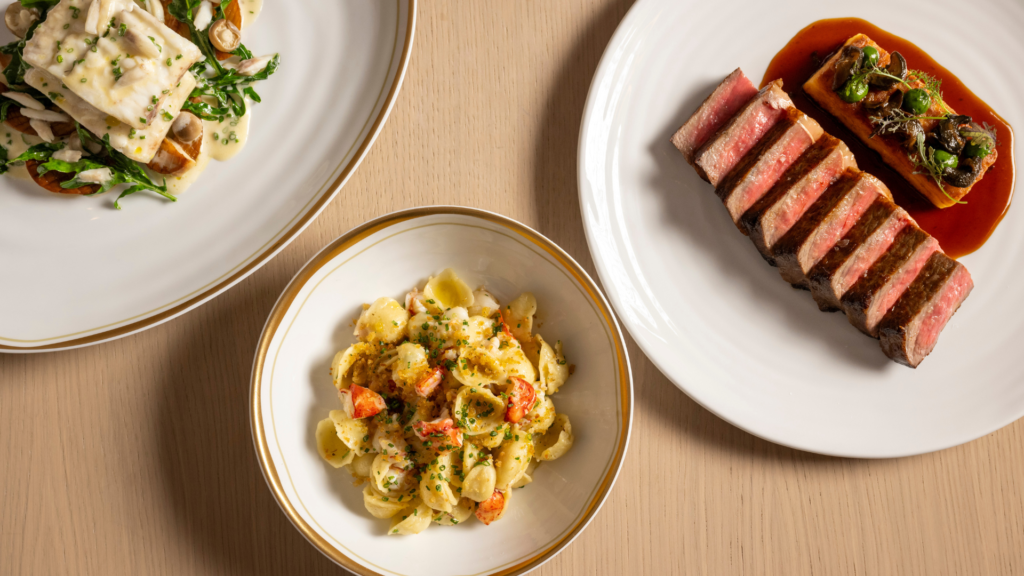
Even the San Marzano tomatoes used in the kitchen’s potato gnocchi pomodoro get special consideration. White sources tomatoes grown in volcanic soil outside Naples and packed in silicone-lined cans to avoid the metallic flavor that can come from standard tin linings. The difference comes at a price: while a six-pack of standard canned tomatoes might cost around $30, the tomatoes he uses run closer to $80.
The difference is not something a guest necessarily needs to know before ordering but it’s something they should be able to taste.
“Not all pasta pomodoros are created equal.”
Luxury Is Also Knowing When to Keep It Simple
For all the work that goes into the food, White is not merely interested in building menus that make guests feel as though they are eating for the chef’s approval.
His approach is to keep most of the menu familiar while reserving roughly 20% of the dishes for more adventurous ingredients and seasonal specialties. That might mean matsutake mushrooms, porcini, black or white truffles, or puntarella when it is in season. Those ingredients keep the kitchen creatively engaged while giving guests the option to try something new without making every dish feel like an experiment.
It’s a balance that also makes the restaurants more inviting to regulars. White says some Santi guests dine there two or three times a week. That kind of frequency is difficult to sustain if every meal feels overly rich or like a special occasion that requires recovery time afterward.
Instead, the goal is to leave guests satisfied, not overwhelmed.
“I want people to walk out of this restaurant knowing that they had a meal. They were not overcharged for it. They felt value,” White says. “They feel satiated, but they’re not busting your gut.”
That approach is part of what makes Santi and MIKA feel less like places reserved for milestone celebrations and more like restaurants people can fold into their daily lives. The menu has room for indulgence, but it also makes room for familiarity, comfort and the kind of meal you might find yourself craving again just a few days later.
White also resists the urge to dictate how people should eat. There is no need to instruct guests on the exact order in which they should approach a meal or how they should combine ingredients on the plate.
“They don’t want to be told, ‘First start with this, then finish with this, and you’ve got to put this on this…’ That’s the way New Yorkers do not want to eat.”
It’s a refreshingly straightforward philosophy. Make the food exceptional, give people options, and trust them to enjoy it.
Bruce Bronster Brings the Business Vision Into Focus
Behind the restaurants is a partnership that gives White the freedom to concentrate on the culinary side, while building a hospitality group designed to grow beyond a single city or concept.
Bronster, BBianco’s co-founder, comes from a background in law and business, but his interest in food precedes the boardroom. He grew up in a household where he and his family were constantly cooking and working in kitchens, and he still describes himself as a foodie with chefs being among some of his closest friends.
That combination of genuine culinary interest and business experience shapes how he approaches the partnership.
“You need both sides to make a restaurant work,” Bronster says. “If it’s all business, you lose what makes it special. If it’s all passion, you may not have a viable business.”
The division of responsibilities is clear. White leads the culinary vision, while Bronster handles much of the business, legal work and dealmaking. He is also closely involved in the art and design of the restaurants, helping shape the spaces in which White’s cuisine is experienced.
“One of the best things about our partnership is that we instinctively know how to stay in our lanes,” Bronster says. “Michael is the culinary genius, and he leads that side.”
That doesn’t mean the two operate in separate worlds. They collaborate on concepts, interiors and the overall feel of a restaurant, bringing their respective expertise to decisions that affect guests’ experiences. White’s knowledge of food and hospitality coincides with Bronster’s understanding of the business required to sustain it.
For Bronster, commercial success and creative ambition have to work together. Great food alone cannot carry a restaurant if the service falls short, the design doesn’t support the experience, or the economics don’t make sense. Every single part of the operation has to deliver.
That thinking also influences where B. Bianco chooses to expand. The group works with major real estate developers whose projects have helped create opportunities across different markets and hospitality settings.
The relationships are built on trust developed over the years. White says many of the principals behind these partnerships have been dining with him for approximately 25 years, giving them an understanding of what he and his team can bring to a project.
For developers, a respected restaurant operator can add significant value to a hotel or venue. For White and Bronster, the right partner provides the opportunity to develop a concept with a distinct identity and the freedom to execute it properly.
Bronster says the team looks for markets with an appetite for great food and a desire for more elevated experiences. Dallas, for example, has an increasingly ambitious dining community, while a resort destination such as Atlantis in the Bahamas offers guests the convenience of an exceptional restaurant within the property itself.
The location is only part of the equation, though.
“We also need the right partners,” Bronster says, “people who share our vision and understand what it takes to deliver it consistently.”
That emphasis on alignment is important as B. Bianco expands. Opening in a new market is not simply a matter of transplanting a menu or replicating an interior. It means finding the right team, sourcing the right products and understanding what guests in that particular setting want from a restaurant.
White says the growth of suppliers across the country has made that process easier. Companies that once primarily served markets such as New York now operate across Miami, Dallas and other cities, allowing the group to maintain consistency in both the ingredients and products it uses.
The result is a business with the infrastructure to expand without losing sight of what makes its restaurants distinctive.
You need both sides to make a restaurant work. If it's all business, you lose what makes it special. If it's all passion, you may not have a viable business.
Building a Hospitality Group That Means Something Beyond the Reservation
Bianco’s ambitions extend beyond its two flagship restaurants. The group has continued to explore opportunities in luxury hotels and resort destinations, including a new project planned for West Palm Beach with Related Ross. Its recent opening of Levant in Puerto Rico also brought 80 new hires into the local community.
For White, that last detail speaks to something bigger than the number of restaurants the group can open. He wants the people who work with him to grow alongside the business, giving long-tenured team members more responsibility and a meaningful role in its future.
He describes seeing employees build lives, buy homes and start families as one of the most fulfilling parts of running the company. Growth, in that sense, is not just about expanding into another market. It’s also about creating opportunities for the people who make the restaurants work every day.
Bronster shares a similar view of what the group should stand for as it develops new concepts. The goal is to deliver something consistently excellent, whether that eventually takes the form of fine dining, a more casual restaurant or a consumer product.
“Something doesn’t have to be expensive or reserved for a special occasion to feel special. Even an everyday meal should feel thoughtful and well made.”
That mindset brings the conversation back to the guest. Luxury is not necessarily the price of the bottle, the formality of the dining room, or the exclusivity of getting a reservation. It’s the feeling that the people behind the restaurant have considered every single part of your experience, from the first sip of wine to the moment someone acknowledges you on your way out.
For White, the real test of whether a restaurant is thriving is not simply a positive review or a full dining room, it’s when guests finish their meal and immediately ask to book another table for the following week.
That’s when he knows the restaurant has done its job.
Perhaps that’s the most compelling part of what White and Bronster are building. Santi and MIKA have their own identities, their own settings and their own reasons to visit, but neither asks guests to choose between exceptional food and feeling comfortable. The culinary standards remain high, the details are carefully considered and the hospitality is designed to make people want to return.
In a dining landscape where luxury can sometimes become a performance in itself, there’s something refreshing about a chef who would rather focus on the butter, the pasta and whether the lighting is right at 7 p.m.
“When people finish and they say, ‘Can I make a reservation for next Thursday night?’ That’s when you know you did it,” White says.
Something doesn't have to be expensive or reserved for a special occasion to feel special. Even an everyday meal should feel thoughtful and well made.
Truffles and blue jeans. A little indulgence, a lot of intention, and no unnecessary rules. That might be the kind of luxury worth making a reservation for.