Why The New York Fashion Summit Debut Matters More Than Any Runway
- By: Julianne Elise Beffa | Photos By: Dezi Catarino
I ran down the cobblestone streets of Tribeca trying not to face-plant in four-inch heels which, objectively, have no business touching snow-stuffed Hudson Street in February. Blacked-out Escalades idled bumper-to-bumper, drivers scanning sidewalks like fashion’s version of Secret Service. On every corner, influencers posed against industrial concrete backdrops while photographers barked directions with theatrical urgency. Chin up. Over the shoulder. Give me drama. The air smelled faintly of perfume layered over espresso martinis from someone’s 2 p.m. “meeting.”
Twice a year, Manhattan transforms into a runway. Not just the venues, but the sidewalks, hotel lobbies, black cars, restaurants, and afterparties. It becomes a moving stage where models, founders, stylists, investors, editors, and hopefuls orbit one another in choreographed chaos. The city performs. It dazzles. It sells.
But something felt different this season.
Maybe it was the wave of emerging designers bringing raw and fearless energy into the city. Maybe it was the quiet reentry of legacy houses reclaiming space. Maybe it was the weather, freezing one minute and then softening to a balmy thirty-five degrees as if even the climate understood what time it is.
Or maybe it was the presence of something new. Something quieter. Something more structural.

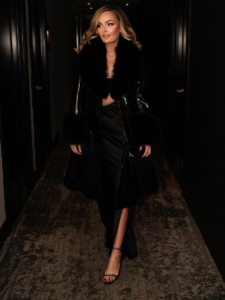
Upon arrival at Moonlight Studios in Tribeca, I double-checked the address on my phone, gathered the train of my long black dress, and stepped inside, unsure of what to expect. The moment the doors opened, the tone shifted.
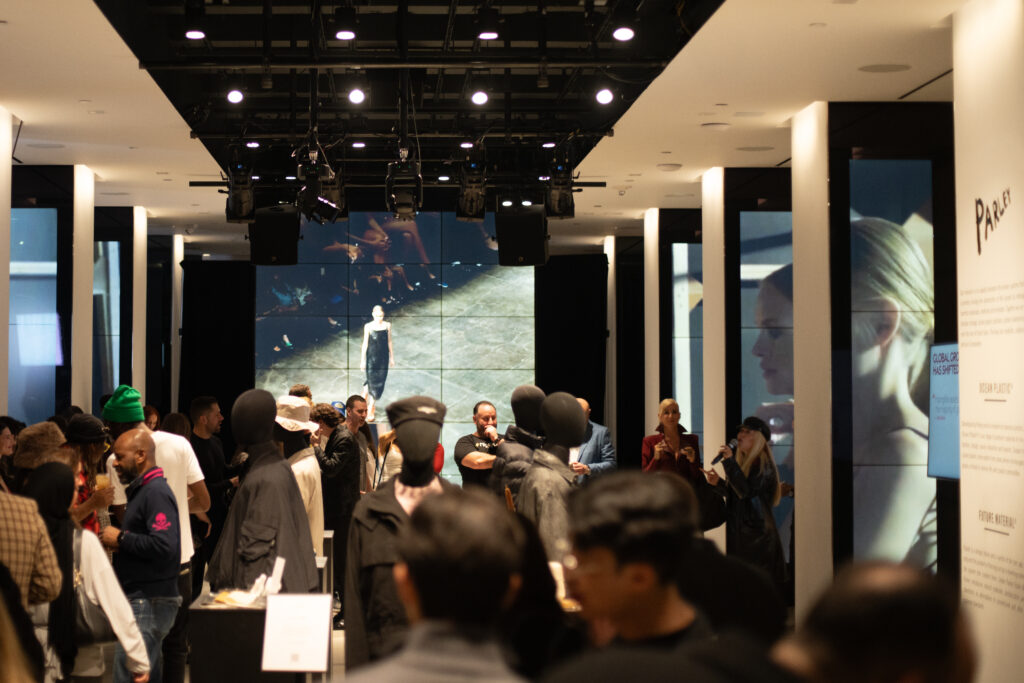
Presented by Signet Fashion in partnership with reState Media, the inaugural Summit felt less like a Fashion Week activation and more like walking into The Met the morning after the Gala. The glamour still lingered, but the conversations had sobered.
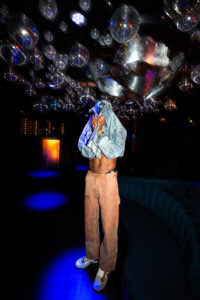
White pillars rose toward high ceilings. Spotlights illuminated archival pieces from Dior and other legendary houses, positioned like sacred artifacts rather than seasonal statements. Installations pulsed softly throughout the space, including an ocean-inspired materials exhibit by Parley for the Oceans that forced you to reconsider every synthetic fiber you have ever worn. It was aesthetic, yes. But it was also intentional.
I glanced left and found the one universal stabilizer at any gathering. A bar. Specifically, a bar with my personal favorite drink of choice, Jack Daniel’s. The open-bar, sponsored by Double Cross Vodka, was staffed by bow-tied bartenders who looked like they moonlighted in fragrance campaigns. The details were polished. The atmosphere was elevated. But what struck me most was not the design. It was the room.

Within minutes, I ran into industry executives I have collected over the years like limited-edition wardrobe pieces. Actress Rosario Dawson moved through the crowd with the kind of effortless presence that resets your posture without a word. This was not a “hope to be seen” Fashion Week guest list. This was a curated ecosystem. Culture, capital, policy, hospitality, and technology converging without competing.
On Friday, February 13, 300 global leaders convened for an invitation-only evening focused on something fashion does not always pause to examine. Its own infrastructure.
The Summit was built as a high-trust platform for forward-looking dialogue. Designers, investors, technologists, hospitality leaders, cultural institutions, and policy stakeholders gathered not to discuss trends, but to dissect systems. The distinction matters. Fashion loves novelty. But novelty without infrastructure collapses under its own momentum.
The first core conversation of the evening centered on Novel Materials and Circular Manufacturing. Moderated by celebrity stylist & fashion journalist Sandra Okerulu, the discussion explored how next-generation textiles move from experimental prototypes to scalable production. Innovators like Danit Peleg of 3D Printed Fashion Lab and investors shaping material science did not romanticize disruption. They broke down the bottlenecks. Innovation is accelerating. Manufacturing readiness is not. Vision is abundant. Execution remains the constraint.
The second discussion tackled Investing in Emerging Designer Talent. Representatives connected to the Global Creative Economy Institute and the Moleskine Foundation reframed talent not as cultural currency, but as economic infrastructure. Designers are not just creatives. They are small businesses. Employers. Export drivers. To invest in talent is to invest in a city’s GDP. Supporting designers is not philanthropy. It is a long-term economic strategy.
And then came the panel that felt particularly electric during Fashion Week and deeply aligned with the world I live in: The Role of New York City as a Fashion and Hospitality Hub.
Moderated by our very own Charles Ewudo, Founder and CEO of PCN Entertainment and LOOP Magazine, the panel brought together Richie Romero of Nexwrk, Lee Kerzner of Style Global and Bubblefish Media, and Natalie Koepff of New York City Tourism and Conventions. The discussion unpacked how cities function as convening engines. How hospitality, nightlife, cultural events, and creative industries intersect to shape global dialogue and unlock economic opportunity. This conversation resonated on a personal level.
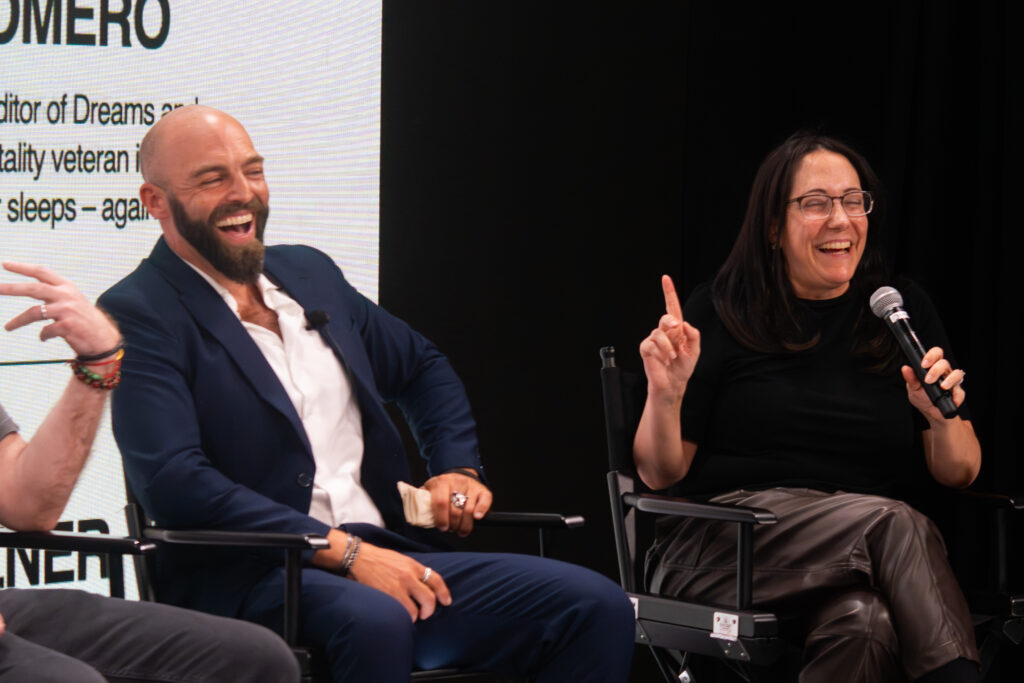
New York is not a backdrop for fashion. It is an active participant. The hotels that host editors. The restaurants that close for private dinners. The nightclubs where collaborations are conceived at 1 a.m. The afterparties where investors and designers exchange numbers over cocktails. Fashion Week does not just showcase collections. It fills rooms. It moves capital. It forges alliances. It reinforces New York’s status as a global commerce engine disguised as a cultural celebration.
Throughout the evening, artistic interventions deepened the atmosphere. Works by Monica C. LoCascio and creative director Ruby June blurred the line between installation and inquiry. Jewelry brand(s) TOHUM and The Age of Stones shimmered beneath focused light, a reminder that craftsmanship and innovation are not opposing forces but parallel ones.
Eventually, as all Fashion Week gatherings do, the Summit transitioned into a reception. Conversations that began onstage migrated to cocktail tables. Investors compared notes with technologists. Policy leaders spoke with designers about scale. The energy shifted from theoretical to practical. There was something rare in the room. Alignment.
Dean Sorrentino, CEO of Signet Fashion, articulated it simply. This was the kind of room New York needs. One where culture, capital, and innovation sit at the same table with shared urgency.
By the time I stepped back onto Hudson Street, the Escalades were still idling. Influencers were still posing. Cameras were still flashing. Fashion Week continued its glamorous sprint. The spectacle had not slowed. But inside Moonlight Studio, something more consequential had unfolded.
For eighteen seasons (yes, eighteen), I have watched New York perform.
This year, I watched it plan.
Fashion has always shaped identity and aspiration. It tells stories about who we are and who we want to become. But the next decade will demand more than aesthetic influence. It will require systemic reinvention. Materials must evolve. Manufacturing must modernize. Emerging designers must be funded with intention. Cities must recognize their role not just as hosts, but as strategic collaborators.
Running through Tribeca in heels will always be part of the mythology. The chaos, the cameras, the drama. That spectacle is not going anywhere. But perhaps the true power of Fashion Week does not lie on the runway or the sidewalk. It lies in the rooms where infrastructure is built. Where capital is aligned with creativity. Where cities decide how they will compete in the global creative economy.
This year, the New York Fashion Summit ensured that room existed. And that may be the most important show of all.
Read More


Nightlife + Dining
Amanda Coscarelli